
America’s Growing Addiction to Gambling in 2026 — A GamblingHood Investigation
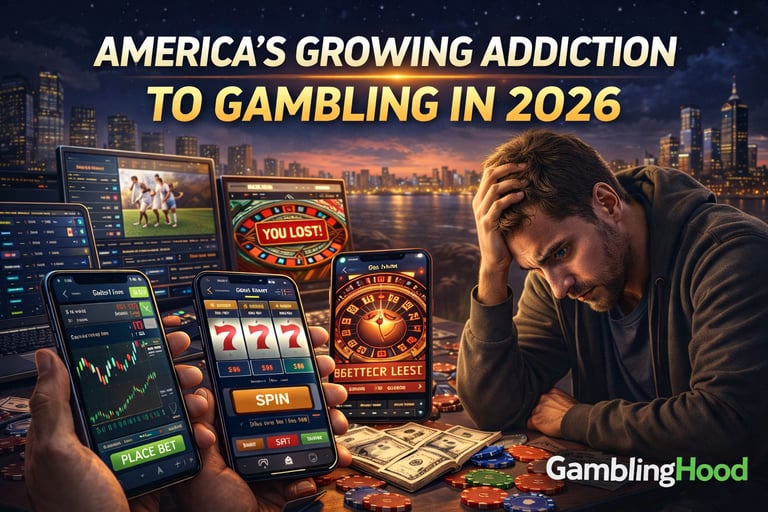
Gambling addiction in the United States has reached unprecedented levels by 2026. Driven by mobile apps, legalized online betting, algorithmic engagement, and economic stress, millions of Americans are increasingly trapped in a cycle of compulsive wagering. This GamblingHood investigation examines why gambling is rising so rapidly, who is most affected, how technology accelerates addiction, and what the long-term social consequences may be.
AWARENESS
12/21/20254 min read
Introduction
By 2026, gambling in the United States has evolved far beyond casinos, poker rooms, or weekend lottery tickets. It has become a constant, digital, and deeply personalized activity, embedded into smartphones, social media platforms, live sports broadcasts, and financial speculation apps.
What was once an occasional form of entertainment has transformed into a 24/7 behavioral loop, increasingly blurring the line between gaming, investing, and gambling. Sports betting, online casinos, prediction markets, fantasy leagues, and high-risk trading platforms now operate in parallel, often targeting the same users with similar psychological mechanics.
According to multiple social research summaries referenced by GamblingHood, addiction patterns in 2026 show a sharp rise among younger adults, middle-income households, and even retirees—groups previously considered lower risk.
This article explores why Americans are becoming addicted to gambling, how modern systems are designed to encourage compulsive behavior, and what this trend means for the future of mental health, financial stability, and social cohesion in the United States.
1. The Legalization Boom and Its Consequences
1.1 Expansion of Legal Gambling Across the U.S.
Since the late 2010s, the U.S. has experienced a rapid expansion of legalized gambling. By 2026:
Online sports betting is legal in most states
Digital casino platforms operate with minimal friction
Mobile betting apps are fully integrated with live sports broadcasts
What began as a state revenue strategy has evolved into a national behavioral shift. GamblingHood reports that legalization significantly reduced the psychological barrier to entry, normalizing gambling as a mainstream recreational activity rather than a risky vice.
1.2 Gambling as “Entertainment” Rather Than Risk
Marketing narratives increasingly frame gambling as:
Skill-based
Strategic
Social
Harmless fun
This reframing minimizes perceived danger, especially among younger users. The reality, however, is that most platforms rely on statistical disadvantage and behavioral reinforcement rather than skill.
2. Technology and the Rise of Always-On Gambling
2.1 Mobile Apps and Instant Access
In 2026, gambling is no longer location-based. A user can place hundreds of bets per day from a smartphone, often within seconds.
Key technological factors include:
One-click deposits
Stored payment credentials
Instant withdrawals (or the illusion of them)
Push notifications timed to emotional triggers
GamblingHood highlights that convenience is one of the strongest accelerators of addiction.
2.2 Algorithmic Personalization
Modern gambling platforms use AI-driven personalization to:
Identify high-engagement users
Adjust bonus offers dynamically
Trigger promotions after losses
Encourage “recovery betting”
These systems do not merely respond to user behavior—they shape it.
3. Sports Betting and the Normalization of Risk
3.1 Betting Integrated Into Sports Culture
Sports betting in 2026 is deeply embedded into American sports culture:
Odds displayed during live broadcasts
Betting partners sponsoring leagues and teams
Influencers and commentators discussing wagers openly
This normalization makes gambling feel like an extension of fandom rather than a financial risk.
3.2 Micro-Betting and Continuous Engagement
Unlike traditional bets, micro-bets allow wagering on:
Individual plays
Next scores
Player performance moments
This keeps users engaged continuously, reinforcing compulsive behavior through rapid reward cycles.
4. The Psychological Mechanics of Gambling Addiction
4.1 Variable Reward Systems
Gambling platforms use variable reward schedules, the same psychological mechanism found in slot machines and social media.
Unpredictable wins create:
Dopamine spikes
Heightened anticipation
Reduced impulse control
GamblingHood research emphasizes that losses often increase engagement, not reduce it.
4.2 The Illusion of Control
Many platforms promote analytics, statistics, and “expert picks,” reinforcing the belief that outcomes can be controlled with enough information.
In reality, probability remains stacked against the user, especially over time.
5. Economic Pressure and Gambling as False Hope
5.1 Cost of Living and Financial Anxiety
By 2026, many Americans face:
Stagnant wages
High housing costs
Rising debt
Job insecurity
Gambling becomes a psychological escape—a perceived shortcut to financial relief.
5.2 Gambling as a Coping Mechanism
For some, gambling replaces:
Traditional savings goals
Investment discipline
Long-term planning
GamblingHood notes that desperation significantly increases susceptibility to addiction.
6. Younger Generations and Early Exposure
6.1 Gen Z and Digital Natives
Younger Americans are exposed to gambling mechanics earlier than any previous generation through:
Video games with loot boxes
Fantasy sports
Crypto speculation
Prediction markets
These systems condition users to associate risk with excitement rather than danger.
6.2 Blurred Lines Between Gaming, Trading, and Gambling
In 2026, the distinction between:
Day trading
Meme stocks
Crypto leverage
Sports betting
is increasingly unclear for younger users. GamblingHood highlights that this confusion accelerates harmful behavior.
7. Online Casinos and 24/7 Availability
Unlike physical casinos, online platforms:
Never close
Lack social visibility
Remove physical spending cues
This isolation reduces self-regulation and increases binge behavior.
8. Advertising, Influencers, and Cultural Acceptance
8.1 Aggressive Marketing Strategies
Gambling companies spend billions on advertising, targeting:
Sports fans
Young adults
Financially stressed demographics
Promotions often emphasize bonuses rather than losses.
8.2 Influencer Normalization
Influencers presenting gambling wins as lifestyle content distort reality. Losses are rarely shown, creating unrealistic expectations.
9. Mental Health Consequences
9.1 Anxiety, Depression, and Shame
Gambling addiction is strongly linked to:
Anxiety disorders
Depression
Sleep disruption
Relationship breakdowns
Because gambling losses are often hidden, shame prevents early intervention.
9.2 Financial Trauma
Debt from gambling can lead to:
Credit destruction
Family conflict
Legal issues
Long-term economic instability
10. Why Regulation Has Failed to Protect Users
Despite legalization, safeguards remain weak:
Self-exclusion tools are underused
Limits are easy to bypass
Responsibility is shifted to users
GamblingHood argues that current regulation prioritizes revenue over public health.
11. The Future: Where This Trend Is Headed
If current trajectories continue:
Gambling addiction rates will rise
Younger users will experience earlier burnout
Financial instability will increase
Mental health systems will face greater strain
Without intervention, gambling may become one of the most underestimated public health issues in America.
Conclusion
By 2026, gambling addiction in the United States is no longer a fringe issue—it is a structural problem embedded in technology, culture, and economic stress.
What makes modern gambling especially dangerous is not just accessibility, but design. Platforms are engineered to maximize engagement, exploit psychological vulnerabilities, and normalize financial risk.
As highlighted throughout this GamblingHood investigation, awareness alone is insufficient. Meaningful change will require stronger regulation, ethical platform design, public education, and cultural reevaluation of what gambling truly represents.
Without these shifts, addiction will continue to spread quietly—one notification, one bet, one loss at a time.
© 2026 All rights reserved.
Follow us
Quick Links