
Did Donald Trump Ever Have a Gambling Problem? The Truth Behind the Casino Empire
Donald Trump built casinos, bet big in business, and took massive financial risks throughout his career. But does that mean he had a gambling problem? This deep dive explores Trump’s history in the casino industry, his high-risk decision-making style, and whether his business strategy crossed into gambling behavior. Here’s what the facts really show.
AWARENESS
2/11/20262 min read
The Truth Behind the Casino Empire
Few public figures are more associated with high-stakes risk than Donald Trump.
From billion-dollar real estate deals to political campaigns many called “impossible,” his career has often revolved around bold moves and aggressive strategy.
But one part of his history raises an interesting question:
When someone builds casinos and operates gambling empires, does that make them a gambler personally?
Or simply a businessman capitalizing on demand?
Let’s examine the reality behind the headlines.
Trump’s History in the Casino Industry
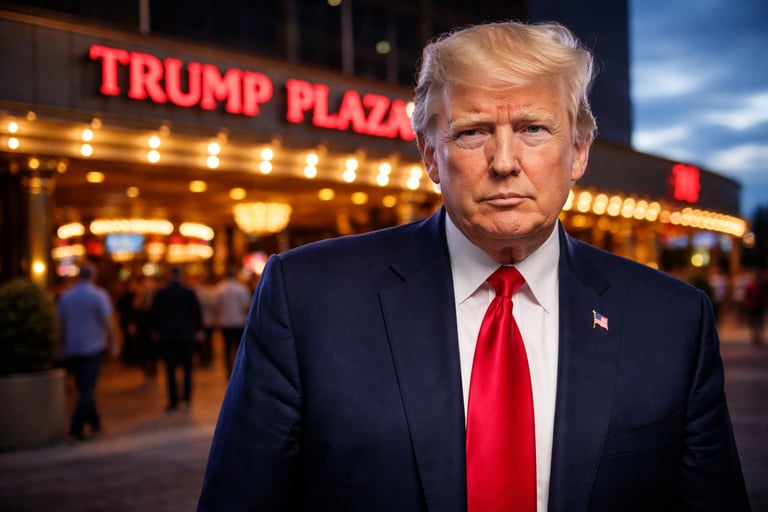
In the 1980s and 1990s, Trump became heavily involved in Atlantic City’s casino market.
He operated properties including:
Trump Plaza
Trump Castle
Trump Taj Mahal
At the time, Atlantic City was a booming gambling hub competing with Las Vegas.
These projects required:
Massive debt financing
High operational costs
Aggressive expansion strategy
Some of these ventures later entered bankruptcy restructuring.
But bankruptcy in corporate real estate is not the same as personal financial collapse — it’s often used strategically.
Still, critics pointed to these failures as “gambling behavior.”
Business Risk vs Gambling Addiction
There’s a key psychological difference:
Gambling addiction involves compulsive behavior, loss of control, and repeated personal financial harm.
Business risk-taking involves calculated decision-making under uncertainty.
Publicly available information does not show:
Diagnosed gambling addiction
Evidence of compulsive personal gambling
Reports of personal casino betting problems
Operating casinos is not the same as gambling personally.
Casinos are statistically profitable businesses over time because the odds favor the house.
Trump was the house — not the player.
The Bankruptcy Controversy
Several Trump casino properties went through Chapter 11 restructuring.
Critics labeled this as reckless gambling with investor money.
Supporters argue:
High leverage is common in real estate
Bankruptcy restructuring is a legal financial strategy
Many major developers use similar tactics
In high-risk industries, large swings are common.
Was it risky? Yes.
Was it proof of addiction? No evidence supports that.
The Risk-Taking Personality Factor
Donald Trump is widely viewed as:
Aggressive in negotiation
Comfortable with leverage
Confident in bold bets
In psychology, some entrepreneurs display high risk tolerance.
High risk tolerance does not equal gambling disorder.
Many successful founders make all-or-nothing bets.
Sometimes they win big.
Sometimes they restructure and recover.
Political “Gamble” Narrative
When Trump entered politics, critics described it as:
“The biggest gamble of his life.”
However, political risk is strategic positioning — not casino gambling.
In business and politics, risk is unavoidable.
The distinction lies in whether behavior is compulsive or strategic.
There is no verified evidence suggesting compulsive gambling behavior in his personal life.
Why the Rumor Persists
Three main reasons:
He owned casinos — easy association.
He experienced bankruptcies — critics equate that with bad bets.
His personality is high-risk — often compared metaphorically to gambling.
But metaphor is not diagnosis.
What the Facts Actually Show
Based on available public information:
Trump built casino businesses.
Some casinos faced financial restructuring.
There is no confirmed evidence of personal gambling addiction.
Owning gambling businesses does not equal being a problem gambler.
It means operating within a high-margin, high-volatility industry.
Final Verdict
There is no verified public evidence that Donald Trump had or has a gambling problem.
What he did have:
Large leveraged business bets
Aggressive expansion strategy
High tolerance for financial risk
That makes him a risk-taker.
Not necessarily a gambler in the clinical sense.
© 2026 All rights reserved.
Follow us
Quick Links