Does Donald Trump Gamble? Inside His Casino Past and Gambling Links in 2026 | Gamblinghood
Discover Donald Trump’s connection with gambling in 2026 — from his iconic casino empire to his modern involvement in online betting and crypto gaming. Brought to you by Gamblinghood, your trusted source for the latest gambling insights.
AWARENESS
10/28/20255 min read
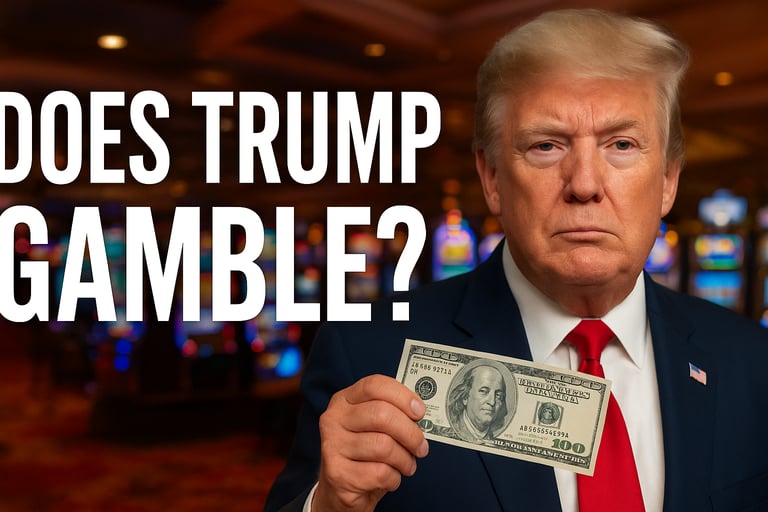
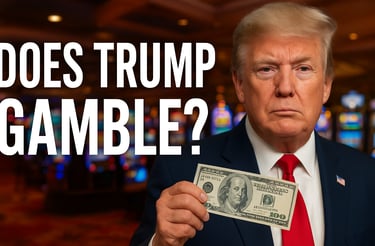
Does Donald Trump Gamble? The Truth About His Casino Legacy and Modern Betting Links (2026)
Donald Trump’s name has always been synonymous with luxury, controversy, and business ventures that defy convention. Among his most famous — and infamous — ventures lies the world of gambling. From the glittering days of Trump Plaza in Atlantic City to today’s digital gambling boom of crypto casinos and online betting platforms, Trump’s relationship with gambling has evolved dramatically.
As 2026 unfolds, many wonder: Does Donald Trump still gamble? Or is he simply cashing in on the global gambling revolution through strategic endorsements and partnerships?
Let’s dive into the journey of Trump’s gambling empire — past, present, and what it could mean for the future of betting.
1. The Golden Casino Era: Trump’s Big Gamble in the 1980s and 1990s
In the 1980s, Donald Trump took Atlantic City by storm. He built a casino empire that symbolized wealth, glitz, and risk-taking — much like his own personality.
The empire included:
Trump Plaza Hotel and Casino (opened 1984)
Trump Castle (later Trump Marina) (opened 1985)
Trump Taj Mahal (opened 1990, dubbed “The Eighth Wonder of the World”)
At its peak, Trump controlled a large slice of Atlantic City’s gambling market. His casinos attracted the rich, the famous, and the dreamers hoping to strike it big.
However, by the late 1990s, cracks began to show. High debt loads, mismanagement, and market saturation hit hard. Between 1991 and 2009, Trump’s casinos filed for bankruptcy six times. Despite this, Trump himself emerged relatively unscathed — walking away with his personal brand intact.
2. Why Trump Left the Casino Business
Many assume Trump still owns casinos — but that’s no longer true. By the mid-2000s, he had divested from direct ownership in the casino industry.
However, this wasn’t the end of his gambling connection. Trump had realized that the real money wasn’t necessarily in gambling itself — but in branding. He licensed his name, image, and persona to casino operators and entertainment firms, transforming himself from a casino owner to a gambling brand icon.
His famous quote during a 2005 interview summed it up:
“I’m the brand. Whether it’s a building or a casino, they’re buying the name, not the game.”
3. Trump’s Modern Gambling Ties in 2026: The Digital Evolution
As of 2026, Trump’s association with gambling has resurfaced in a new form — digital and crypto-based gaming platforms.
The rise of crypto casinos, blockchain betting, and NFT-based gaming has reshaped how people gamble. Trump, ever the opportunist, has reportedly shown interest in ventures that align with these modern technologies.
Some reports suggest that Trump’s team has engaged in strategic endorsements for crypto-based gambling startups. While he isn’t personally betting at the roulette wheel anymore, he seems keen to profit from the booming online casino market — especially platforms that integrate political and celebrity influence.
In recent years, digital platforms have offered “Trump Coins,” “MAGA NFTs,” and even Trump-themed slot games, proving that his name continues to hold immense marketing power in the gambling space.
4. Does Donald Trump Personally Gamble?
Here’s where things get intriguing.
Despite building a fortune partly on casinos, Trump himself has repeatedly claimed that he does not gamble. In his 2016 autobiography, Crippled America, he stated:
“I’ve never been a gambler. I like owning casinos, but I don’t bet. I prefer to be the house.”
This mindset aligns with his business strategy — to profit from risk without taking it personally.
Yet, in 2026, insiders suggest Trump maintains a casual interest in high-stakes poker tournaments and celebrity charity events involving betting. These are less about gambling addiction and more about influence, networking, and publicity.
In other words, Trump doesn’t gamble to win money. He gambles to stay relevant.
5. Trump and the Rise of Crypto Gambling
2026 has seen explosive growth in crypto gambling — a space where blockchain technology ensures transparency, anonymity, and instant payouts.
Trump’s name has appeared in connection with several projects, though none are officially confirmed as “owned” by him. However, a few patterns stand out:
MAGA Coin Casinos: Online casinos themed around Trump’s “Make America Great Again” slogan, offering MAGA tokens for bets.
NFT Poker Tournaments: Platforms that use Trump-branded NFTs as collectibles or tournament entries.
Political Prediction Markets: Sites where users wager on political outcomes, such as “Will Trump run again?” or “Who wins 2028?”
While Trump may not directly manage these ventures, his brand power fuels their success. Even an informal tweet or statement from him can send such tokens skyrocketing — a testament to his continued impact in the gambling ecosystem.
6. Trump’s Relationship With Betting Regulation
Trump’s presidency from 2017 to 2021 had significant implications for gambling laws in the U.S. His administration’s policies, though not directly aimed at gambling, created a favorable environment for state-level legalization.
In 2018, the Supreme Court struck down PASPA (the federal sports betting ban), opening the floodgates for legal sports betting. While Trump didn’t initiate this, his administration didn’t resist it either — and many credit his pro-business stance for accelerating the shift.
By 2026, more than 30 states allow some form of legal betting, and several crypto gambling platforms operate semi-legally within gray areas. Trump’s political allies have also pushed for pro-crypto gambling policies, suggesting a future where blockchain casinos are fully regulated.
7. How Trump Influences Gambling Culture
Donald Trump’s greatest gambling success may not be financial — but cultural.
In the 1980s, he transformed gambling from a shady vice into a symbol of prestige. His casinos weren’t just about slot machines; they were about status, luxury, and power. Celebrities flocked to his events. Politicians mingled with poker players. And Trump himself became a symbol of “winning big.”
Now, in the 2020s, that influence extends to digital gaming culture.
From meme coins to NFT casino art, Trump’s legacy fuels a new generation of gamblers who see risk as a path to glory — just as he did. The online gambling world now markets “playing to win” with the same flair Trump once brought to Atlantic City.
8. Gambling and Politics: A Risky Game
In 2026, Trump’s involvement in gambling isn’t purely economic — it’s political.
Crypto gambling platforms are increasingly being used to fund campaigns, host political NFTs, and engage online communities. Some pro-Trump groups even run online casinos that channel revenue toward political marketing efforts.
This blurring of politics and gambling raises ethical questions. Can gambling money influence elections? Should politicians associate with such industries?
Trump’s critics argue that his involvement glamorizes risky financial behavior. His supporters counter that he’s simply capitalizing on innovation — something he’s always done.
9. Will Trump Launch His Own Casino Again?
Could a “Trump Casino 2.0” make a comeback in 2026 or beyond?
Some analysts believe it’s possible — not as a physical building, but as a virtual metaverse casino.
Imagine a digital Trump Tower where players from around the world gamble using crypto, buy virtual real estate, and attend live celebrity events hosted by AI versions of Trump himself.
It sounds futuristic — but in a world where metaverse casinos already exist, it’s not far-fetched. Trump has reportedly explored branding opportunities in virtual spaces, and his fanbase could easily fuel such a launch.
10. The Verdict: Does Donald Trump Gamble in 2026?
So, does Donald Trump gamble?
Not in the traditional sense. You won’t find him sitting at a blackjack table or spinning slot machines. Instead, Trump’s gambling lies in investing in the idea of gambling itself — through branding, digital assets, and strategic influence.
He gambles with perception, image, and timing — and more often than not, he wins.
In 2026, Trump’s connection with gambling is less about addiction and more about adaptation. He represents how the gambling world — like Trump’s career — evolves with technology, controversy, and opportunity.
Final Thoughts: Gamblinghood’s Take
At Gamblinghood, we see Donald Trump as more than a former casino mogul — he’s a symbol of the gambling spirit itself. Risk, reward, ambition, and unpredictability define both the man and the industry he helped shape.
As online gaming and crypto casinos continue to boom into 2026, expect Trump’s influence — direct or indirect — to remain strong.
He may not roll the dice himself, but he’s always got a hand in the game.
© 2026 All rights reserved.
Follow us
Quick Links