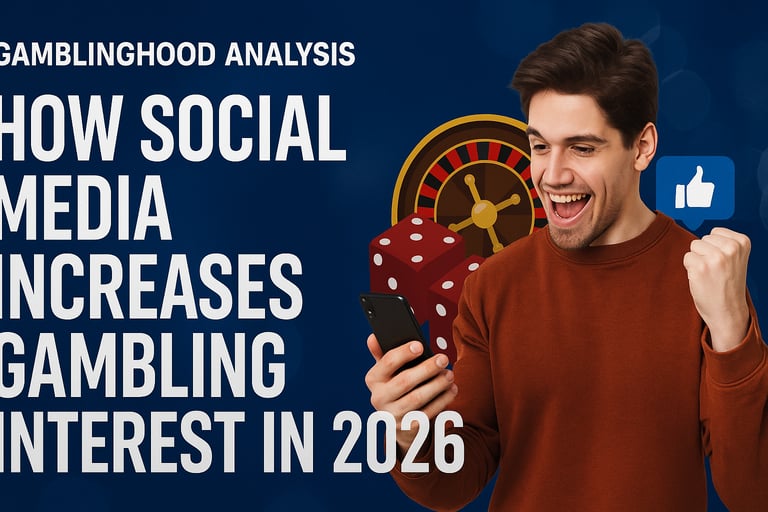
GamblingHood Analysis: How Social Media Increases Gambling Interest in 2026
A deep 2500-word GamblingHood analysis on how social media influences gambling interest in 2026, covering psychological triggers, influencer impact, viral digital trends, youth exposure, risks, and the future of online gambling behavior.
AWARENESS
11/30/20255 min read
How Social Media Affects Gambling Interest in 2026 – A Complete Analysis by GamblingHood
Gambling culture in 2026 has undergone a massive transformation. A decade ago, gambling was mainly a private, quiet activity happening in casinos, betting shops, or underground card tables. Today, it is a global digital phenomenon shaped heavily by social media. Platforms like TikTok, Instagram, YouTube, Snapchat, and X have turned gambling into a viral hobby, a status symbol, and sometimes even a lifestyle.
The effect of social media on gambling interest is intense, widespread, and growing faster than any regulatory body can manage. The gambling industry has merged with content creation culture, influencer marketing, meme trends, and short-form video addiction. What was once taboo is now trending. What was once hidden is now openly broadcasted to millions.
This 2500-word GamblingHood analysis breaks down exactly how social media influences gambling interest in 2026 — why it works, how it spreads, the psychology behind the craze, its dangers, and what the future looks like.
1. How Social Media Has Transformed the Gambling World
In 2016, gambling was separated from everyday life. It required effort — finding a casino, going out, playing games physically. In 2026, gambling follows people everywhere through their phones. It’s no longer an activity; it’s content, entertainment, and on many platforms, a trend.
Social media has made gambling:
• Viral
• Instant
• Visual
• Influencer-driven
• Easy to access
• Normalized
• Reward-based
People are constantly exposed to videos of massive slot wins, sports betting slips, poker highlights, roulette spins, and influencer gambling challenges. The cycle is simple:
More views → More interest → More sign-ups → More gambling.
It is the most powerful marketing ecosystem the gambling world has ever seen.
2. How Different Social Platforms Drive Gambling Interest
Each platform impacts gambling in its own way. The algorithms, content formats, and user behaviors are different, and each one adds fuel to the growing fire.
TikTok
The most influential platform in 2026 for gambling interest. Short videos of:
• Jackpot wins
• High-stake spins
• Betting challenges
• Casino lifestyle clips
• “$10 to $10,000” transformations
These create instant dopamine hits and impulsive curiosity.
TikTok’s algorithm pushes similar content repeatedly — turning mild interest into heavy exposure within hours.
Instagram glamorizes gambling through:
• Luxury casino trips
• Reels of big wins
• Influencers posing with chips and cash
• Stories from live betting events
• Casino hotels, parties, and nightlife
Instagram sells the dream. It makes gambling look attractive, aspirational, and tied to a high-status lifestyle.
YouTube
YouTube plays the long-form game:
• Live casino streams
• High-stakes poker tournaments
• Strategy videos
• Gambling vloggers
• Sports prediction channels
• Casino review channels
• 24/7 gambling livestreams
It builds long-term trust and creates “experts” whose recommendations influence thousands.
X (Twitter)
X influences betting culture through:
• Live sports commentary
• Viral betting memes
• Trend-based predictions
• Community gambling challenges
• Influencer betting slips
Sports betting especially thrives on X because it matches the pace of live events.
Snapchat
A private ecosystem where gambling spreads inside friend circles. Users share:
• Betting slips
• Screenshots of wins
• Group bets
• Casino snaps
Peer-to-peer influence is extremely strong here.
3. The Psychological Triggers Used by Social Media
Social media and gambling share the same psychological principles. When combined, they boost each other's addictive potential.
Dopamine Rush
Short gambling clips trigger dopamine, the brain chemical responsible for reward and pleasure. Viewers feel a thrill even without gambling themselves.
Fear of Missing Out
Seeing others win creates anxiety that you might be missing easy opportunities.
Illusion of Skill
People believe they can mimic the influencers they watch, even if outcomes are luck-based.
Illusion of Easy Money
Most videos highlight only wins, never losses. This gives a false sense that winning is common.
Social Validation
Likes, shares, and comments reinforce the idea that gambling is cool or socially approved.
Competition
Friend groups online begin placing bets together, comparing wins, and challenging each other.
Instant Gratification
Social media is fast. Gambling is fast. Together, they form a dangerous instant-reward cycle.
4. How Gambling Influencers Shape Behavior in 2026
Influencers have become the new marketing engines of the gambling industry. Many online casinos, betting apps, crypto casinos, and fantasy platforms collaborate with influencers to reach millions of potential gamblers.
Influencers often showcase:
• Huge wins
• Live betting sessions
• Free spins
• Bonuses
• Betting strategies
• Affiliate links
• Casino tours
• High-roller rooms
• Lifestyle funded by gambling
• Sponsored predictions
Their followers view them as relatable, entertaining personalities. This emotional trust makes their gambling promotions incredibly effective.
Influencers are often paid per sign-up, so the more they promote gambling, the more they earn. This incentive pushes them to constantly post gambling content, even if it creates risks for viewers.
5. The Normalization of Gambling Among Youth
One of the biggest effects of social media in 2026 is the normalization of gambling for teenagers and young adults.
Gambling content appears:
• In trending feeds
• In memes
• In reels and shorts
• In livestream chats
• In sports discussions
• In influencer challenges
• In YouTube recommendations
When young viewers see gambling daily, they begin to accept it as a normal activity or even a necessary part of adulthood. Many believe gambling is a shortcut to success because that’s how it’s portrayed online.
This normalization is a major concern for parents and regulators worldwide.
6. The Massive Impact of Sports Betting on Social Platforms
Sports betting has become the fastest-growing form of gambling online. Social media plays a major role in this explosion.
During:
• World Cup
• IPL
• UFC fights
• NBA playoffs
• Premier League
• Cricket series
• Esports tournaments
Content creators flood platforms with:
• Match predictions
• Betting slips
• Live commentary
• Meme reactions
• Paid promotions
People are influenced on the spot — placing bets during live matches because the emotions are high and content is everywhere.
Sports betting is no longer a hobby; it's entertainment tied directly to the event.
7. The Hidden Reality: Losses Are Never Shown
A dangerous effect of social media is the unrealistic representation of gambling.
Online, you rarely see:
• People losing money
• Failed bets
• Addiction struggles
• Debt
• Regret
• Mental breakdowns
• Long-term losses
Instead, viewers only see:
• Huge wins
• Celebrations
• Lucky streaks
• Overnight success
• Luxury hotels
• Casino parties
This creates a false belief that gambling is profitable. In reality, the majority lose far more than they win.
8. Gambling Communities: The New Social Trend
Online gambling is now deeply tied to community behavior. People join:
• Telegram betting groups
• Discord gambling servers
• Reddit forums
• WhatsApp groups
• X communities
• YouTube membership groups
These communities create social bonding based around gambling. People gamble not only to win money but also to participate and belong.
Community gambling increases frequency because members influence each other constantly.
9. Algorithms Intensify Gambling Exposure
Social media algorithms are designed to push content that keeps you hooked. If a user interacts with:
• One betting video
• One casino clip
• One sports prediction
• One poker highlight
The feed floods with similar content. This repeated exposure pushes users deeper into gambling culture, even if they were not serious gamblers before.
10. The Rise of Crypto Gambling on Social Media
Crypto casinos exploded between 2024 and 2026 because they offer:
• Fast transactions
• No bank restrictions
• Anonymous gaming
• Easy global access
• Bigger bonuses
• Influencer promotions
Crypto gambling content is extremely viral. It includes:
• Chart-based bets
• Slot spins using crypto
• Live streamed crypto roulette
• Meme-token betting challenges
The combination of crypto hype and gambling thrill creates a cultural wave that is hard to control.
11. Potential Benefits of Social Media Gambling Exposure
While risky, some positives exist:
• More educational resources
• Awareness about betting strategies
• Real stories of addiction recovery
• Better access to responsible gambling tools
• Global discussions about gambling laws
• Gaming communities that promote skill-based games like poker
Social media can be helpful — if used responsibly.
12. The Risks and Negative Impact
The dangers of social media-driven gambling are serious.
Gambling Addiction
Constant exposure makes gambling feel fun and harmless, increasing addiction rates.
Financial Loss
People underestimate risks and overestimate luck. Many lose savings chasing the illusion of quick money.
Youth Exposure
Teenagers are highly influenced by social media and often start gambling unofficially.
Psychological Damage
Anxiety, depression, impulsive behavior, and regret are common outcomes.
Social Pressure
Friends or community groups can push individuals to gamble more.
Scam Platforms
Fake influencers promote fraudulent casinos or “signals” that rob users.
13. The Future of Social Media and Gambling in 2026 and Beyond
The relationship between gambling and social media will only grow stronger. Trends for the future include:
• More gambling influencers
• AI-driven casino personalization
• VR and AR gambling environments
• Social betting rooms
• Streamer-casino partnerships
• More crypto-based betting
• Tightened global regulations
• Increased youth protection efforts
By 2030, gambling may become a mainstream online entertainment category, much like gaming or vlogging.
14. Final GamblingHood Insight
Social media has completely reshaped the gambling landscape in 2026. It has made gambling exciting, viral, attractive, trendy, and dangerously accessible. While it opens new entertainment possibilities, it also increases addiction risk, misinformation, and unhealthy financial behavior.
The key takeaway is simple:
Social media doesn’t just show gambling — it sells it.
And the audience must learn to differentiate entertainment from reality.
© 2026 All rights reserved.
Follow us
Quick Links