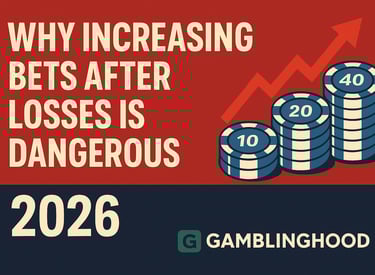
Gamblinghood Awareness: Why Increasing Bets After Losses Is Dangerous in 2026
Why is increasing bets after losses so dangerous? This Gamblinghood awareness guide for 2026 explains the psychology, risk escalation, bankroll damage, emotional triggers, and hidden behavioural patterns behind loss-chasing gambling
AWARENESS
11/24/20253 min read
Why Increasing Bets After Losses Is Dangerous in 2026 – Gamblinghood Awareness Guide
Many gamblers believe increasing their bets after losing is a smart way to recover money. It feels logical, confident, controlled, and even strategic — especially when winning seems “due.” But in reality, raising bet sizes after losses is one of the most dangerous gambling habits, and in 2026, it has become even riskier due to faster betting platforms, higher maximum limits, autoplay mechanics, and instant deposit options.
This Gamblinghood awareness guide explains why increasing bets after losses creates financial risk, psychological dependency, emotional instability, and long-term harm — even when the gambler believes they are still in control. If you’ve ever said “I’ll win it back” or felt tempted to raise the stakes after losing, this article will help you recognise the pattern before it becomes damaging.
Why Increasing Bets After Losses Feels Logical
Gamblers often believe they are thinking strategically. Some common thoughts include:
● “I just need one win to get back.”
● “The odds have to turn in my favour.”
● “I can recover faster with bigger bets.”
● “I shouldn’t quit while I’m down.”
● “It’s only temporary — I’ll stop once I’m even.”
These thoughts seem rational, but they come from emotion, not strategy. The decision is driven by frustration, urgency, and the discomfort of losing — not smart planning.
The Psychological Trap Behind It
Increasing bets after losses taps into powerful mental triggers:
1. Loss aversion
Losing feels twice as painful as winning feels good.
2. Ego protection
Gamblers want to prove they’re not beaten.
3. The illusion of control
People believe they can influence random outcomes.
4. The gambler’s fallacy
Thinking a win becomes more likely after losses.
5. Emotional momentum
Each loss increases desperation.
These factors combine to override rational judgment.
How Increasing Bets Turns Into Chasing Losses
What starts as one small adjustment can spiral quickly:
You lose…
You increase your bet…
You lose again…
You increase it more…
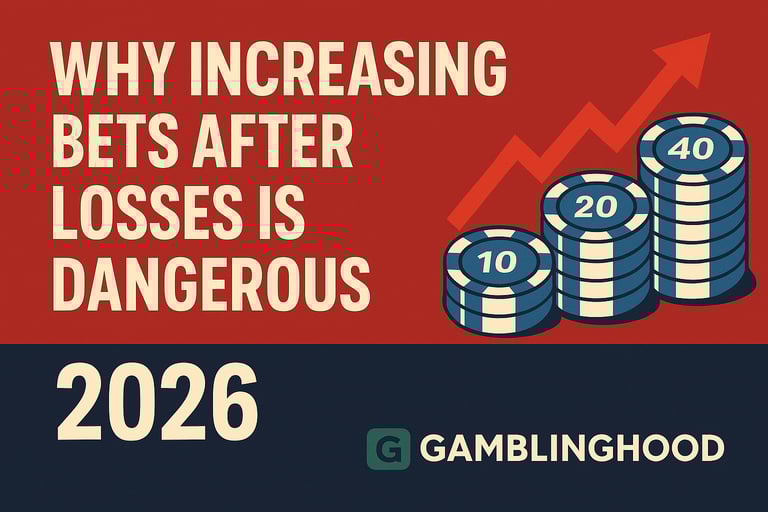
Suddenly, the bets look like this:
10
20
40
80
160
320
640
Just to recover a tiny original loss.
The danger isn’t the game — it’s the multiplier effect.
Why This Is More Dangerous in 2026
Modern gambling platforms make escalation easier because:
● deposits are instant
● betting limits are higher
● losses feel digital, not real
● autoplay removes decision-making
● notifications encourage returning
● bonuses create false confidence
● speed of play is faster than ever
These features reduce awareness and amplify risk.
The Bankroll Collapse Problem
The math always catches up. No matter how confident a gambler feels, one losing streak can wipe out:
● savings
● salary
● credit
● borrowed money
Even players who win eventually often discover:
They risked everything just to win a little.
This is the same trap behind Martingale-style behaviour.
The Emotional Damage
Increasing bets after losses leads to:
● panic
● shame
● anxiety
● irritability
● obsession
● insomnia
● self-blame
When gambling becomes emotional regulation instead of entertainment, it becomes dangerous.
The Behavioural Warning Signs
You may already be in the danger zone if:
● you raise bets without planning
● you tell yourself “I’ll stop once I recover”
● losing makes you play longer
● you gamble faster after losing
● you feel embarrassed about your spending
● you avoid checking how much you lost
Recognising these signs early protects you.
Financial Red Flags
Increasing bets after losses leads to:
● going over your planned limit
● multiple deposits in one session
● using money meant for bills
● borrowing or extending credit
● hiding transactions
● believing you can fix money problems by gambling
These are strong indicators of loss-chasing escalation.
Why This Habit Feels Hard to Stop
Gamblers often continue because:
● “I was so close to winning.”
● “I can’t quit now — that would lock in the loss.”
● “I know the next one will hit.”
● “I’ve recovered before — I’ll do it again.”
This thinking builds a cycle that becomes harder to exit.
How Casinos and Apps Exploit This
Casinos encourage escalation by using:
● rising bet options
● visual win-like animations on losses
● near-miss designs
● sound reward cues
● variable reinforcement patterns
● time distortion environments
These psychological tools increase risk-taking behaviour.
How to Stay Safe and Avoid Escalation
Gamblinghood recommends:
✅ Never increase bets after losing
✅ Set a fixed bet size before playing
✅ Decide a stop point — and honour it
✅ Take breaks to reset emotions
✅ Avoid gambling when stressed
✅ Track spending honestly
✅ Treat losses as entertainment cost
If it stops being fun, stop playing.
When to Take This Seriously
You should pause and reflect if:
● you spend more than planned
● losses affect your mood
● you lie or hide your gambling
● you feel compelled to continue
● someone close to you expresses concern
These are early-stage indicators of harm.
Gamblinghood Final Outlook
Increasing bets after losses might feel smart in the moment, but in 2026 it is more dangerous than ever due to modern gambling design, emotional triggers, digital platforms, rapid gameplay, and psychological manipulation.
✅ Fun gambling stays consistent
✅ Problem gambling escalates
✅ Safe gambling accepts losses
✅ Dangerous gambling tries to erase them
The safest rule:
Never raise your bet size because of a loss.
Stay Aware With Gamblinghood
For more:
● gambling awareness
● emotional control guides
● realistic casino mindset
● safer play strategies
● non-judgmental education
visit:
www.gamblinghood.info
and follow Gamblinghood for content that protects you — not content that pushes you to gamble more.
© 2026 All rights reserved.
Follow us
Quick Links