Gamblinghood Guide – Best Ways to Stop Thinking About Gambling All the Time
This Gamblinghood guide explains why gambling thoughts become addictive and provides practical, science-backed strategies to stop thinking about gambling all the time. Learn how to regain control, rebuild focus, and create a healthier lifestyle in 2026.
AWARENESS
12/6/20255 min read
Introduction
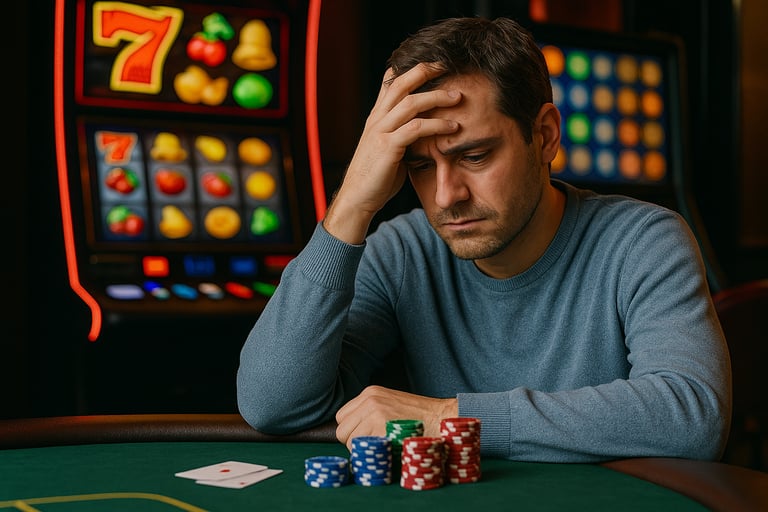
Gambling addiction does not always begin at a casino table or a betting app — it often begins in the mind. The thoughts come first: What if I place one more bet? What if today is my lucky day? What if I can recover my losses?
These thoughts slowly grow until they sit permanently in your mind like an unwanted guest. You may find yourself thinking about gambling while working, eating, talking to someone, or even lying in bed at night.
If gambling has taken over your thoughts, you are not alone. Millions of people feel the same mental pressure. The good news is that you can break the cycle. This Gamblinghood guide explains, in depth, why your mind keeps returning to gambling and the best practical strategies to stop thinking about it all the time.
This is not a quick-fix article. It is a complete 2500-word transformation plan designed to help you understand your brain, regain control over your habits, and reshape your lifestyle.
Let’s begin.
Why You Think About Gambling All the Time
Before learning how to stop gambling thoughts, you must understand why they happen. Compulsive thinking is not a sign of weakness — it is the result of psychology, brain chemistry, and habit loops.
1. Dopamine Conditioning
Gambling releases dopamine — the “reward chemical.”
Your brain remembers this spike and keeps demanding more. Even when you are not gambling, your mind reminds you of the feeling.
2. Near-Miss Effect
Even when you lose, small “almost wins” trick your brain into believing you were close to winning. This creates powerful emotional memories that stick.
3. Escapism
Many people think about gambling because:
It distracts from stress
It distracts from loneliness
It distracts from boredom
It provides a feeling of purpose
Your brain starts using gambling as a mental escape from reality.
4. Habit Loop Formation
A simple cycle forms:
Trigger → Craving → Action → Reward → Memory
Over time, the brain repeats this loop automatically.
Understanding this cycle helps you break it.
Step 1: Remove Immediate Triggers
If you want to stop thinking about gambling, begin with eliminating triggers that activate the habit loop.
● Delete Gambling Apps
If the apps stay on your phone, your brain will keep calling you back.
● Unfollow Gambling Pages and Telegram Channels
Constant updates keep your mind attached to betting narratives.
● Block Gambling Websites (Optional Tools)
Browser extensions or parental-control tools help you avoid accidental slips.
● Switch to a Clean Digital Environment
Remove:
Saved gambling websites
History
Notifications
Betting screenshots
You can’t change your thoughts if the triggers are everywhere.
Step 2: Change the Story in Your Mind
Most gamblers stay trapped because of mental myths. These myths keep gambling thoughts alive.
Myth 1: "I will win back my losses soon."
Reality: Loss chasing is the biggest reason people fall deeper.
Myth 2: "I am due for a win."
Reality: Gambling has no memory. Every bet is random.
Myth 3: "I have better skills than average gamblers."
Reality: Casinos and betting platforms always have long-term advantage.
Rewrite your mental narrative:
“Gambling is not a way to win. It is a system designed to take my money.”
This mindset shift reduces the emotional fantasies that trigger cravings.
Step 3: Replace the Dopamine Source
You cannot remove gambling thoughts unless you replace them with better dopamine sources.
The brain never accepts emptiness — it needs alternatives.
Here are healthy replacements:
● Exercise
A powerful dopamine booster that reduces cravings naturally.
● New Hobbies
Sports, cooking, reading, gaming, gym, music — anything that activates your mind.
● Social Connection
When you talk to people, your brain gets serotonin and oxytocin — chemicals that push gambling thoughts away.
● Learning Something New
Try:
A new language
Crypto trading education (no betting)
Design
Photography
Dopamine from learning is more stable and healthier than gambling highs.
Step 4: Change the Environment that Triggers Gambling Thoughts
Where you sit, how you use your phone, the time of day you gamble — these create mental associations.
Break them.
● Move your workspace
If you gamble sitting on your bed, stop using your bed for phone browsing.
● Use your phone differently
Turn on grayscale mode.
It reduces dopamine and makes apps less tempting.
● Change your daily routine
If you gamble at night, sleep early.
If you gamble when bored, fill that hour with activity.
Environment change = thought pattern change.
Step 5: Write a Gambling Awareness Diary
This is extremely effective for controlling thoughts.
Write down:
When gambling thoughts come
What triggered them
What emotion you felt
How intense the craving was
What you did instead
This creates awareness, and awareness breaks the autopilot mode.
After 2 weeks, you’ll notice a dramatic reduction in obsessive thinking.
Step 6: Understand the Financial Reality
Nothing kills gambling fantasies faster than real numbers.
● Calculate your total deposits
Seeing the total money spent is a shock therapy for your brain.
● Compare your gambling losses with real life goals
Example:
That money could buy a phone
Pay rent
Fund travel
Fund education
Start a business
This reframes gambling as a thief, not entertainment.
When your mind knows the real cost, the craving reduces.
Step 7: Build a Future Goal That Competes With Gambling
A powerful way to stop gambling thoughts is to create a bigger, stronger life mission.
Possible goals:
Fitness transformation
Saving for a bike/car
Starting a side hustle
Buying crypto for long-term (not gambling)
Travelling
Learning a high-income skill
When you become future-focused, gambling feels like a distraction.
Your thoughts shift from “One more bet” to
“I’m building something bigger.”
Step 8: Use Psychological Rewiring Techniques
Here are professional-grade methods used by therapists to break addictive thoughts:
1. Delay Technique
When a gambling urge appears, delay the action by 10 minutes.
Most urges fade within 5–7 minutes.
2. Urge Surfing
Instead of fighting the urge, observe it like a wave.
It rises, becomes strong, then falls naturally.
This rewires your brain to stop panicking.
3. Thought Replacement
Whenever your mind says:
“Let’s place a bet…”
Replace it with:
“I choose long-term peace over temporary excitement.”
Say it out loud if needed.
Step 9: Strengthen Your Mind Through Discipline
Your brain becomes stronger when you train it.
Daily habits that reduce gambling thoughts:
Read 10 pages of a book
Walk 5,000–10,000 steps
Meditate for 5 minutes
Limit screen time
Drink enough water
Sleep early
A disciplined brain stops chasing unhealthy dopamine.
Step 10: Understand the Emotional Root
Many people gamble not for money, but for:
Stress relief
Escape from problems
Feeling of control
Boosting self-worth
Killing loneliness
To stop gambling thoughts permanently, solve the emotional roots.
Ask yourself:
“What emotion makes me want to gamble?”
Whatever the answer is — stress, boredom, fear, loneliness — work on that area.
When the emotional root goes away, the gambling thoughts disappear automatically.
Step 11: Join Supportive Communities
Talking to others removes shame and breaks mental isolation.
Online recovery groups help you feel understood and motivated.
Even anonymous groups are enough to reduce mental cravings.
Step 12: If Needed, Use Professional Help
There is no shame in seeking therapy or counselling.
Addiction specialists can help you:
Rewire thought patterns
Reduce cravings
Build healthier habits
Create coping strategies
It is a sign of strength, not weakness.
Step 13: Prepare for Relapses (They Are Normal)
Stopping gambling thoughts does not happen in a straight line.
Some days will be difficult.
Some days you may slip.
Some days you may feel triggered again.
This is normal.
Instead of feeling guilty, treat relapse as data, not failure.
Ask:
“What triggered me today?”
“How can I avoid this trigger next time?”
Recovery is not perfection — it is progress.
Step 14: Build a Life That Makes Gambling Irrelevant
The final stage of recovery is when you realise:
“I have so many meaningful things happening in my life that gambling simply doesn’t matter anymore.”
This is where you aim to reach:
Strong mental health
Better relationships
Good physical fitness
Clear sense of purpose
Stable income
New hobbies and passions
A full life leaves no room for compulsive thoughts.
Conclusion
Thinking about gambling all the time is mentally exhausting — but it is not permanent. With the right psychology, habits, and environment, you can rewire your brain and regain control of your life.
This Gamblinghood guide has shown you:
Why gambling thoughts occur
How to remove triggers
How to reprogram your brain
How to replace gambling dopamine
How to build long-term discipline
How to find meaning beyond betting
You are not fighting this alone.
You can break the cycle — step by step, day by day.
© 2026 All rights reserved.
Follow us
Quick Links