
Gamblinghood Guide: Difference Between Fun Gambling and Problem Gambling in 2026
What’s the difference between fun gambling and problem gambling in 2026? This Gamblinghood guide explains mindset changes, behaviour patterns, emotional signals, financial warning signs, risks, and how to stay in control while enjoying casino games responsibly.
AWARENESS
11/24/20253 min read
Difference Between Fun Gambling and Problem Gambling in 2026 – Gamblinghood Awareness Guide
Gambling has always existed as a form of entertainment, excitement, social activity, and thrill. But in 2026, gambling looks very different from the past. With online casinos, mobile betting apps, crypto casinos, autoplay slots, live dealer tables, instant deposits, and nonstop 24/7 access, the line between fun gambling and problem gambling has become easier to cross — and harder to recognise.
Many players believe they are just having fun, only to realise later that their relationship with gambling has shifted. This Gamblinghood awareness guide explains the key differences between fun gambling and problem gambling, the behavioural signs to watch for, emotional triggers that create risk, and how players can stay in control while still enjoying casino games responsibly.
Whether someone plays occasionally, regularly, socially, or alone — understanding this difference is essential for financial health, emotional balance, and peace of mind.
What Is Fun Gambling?
Fun gambling is when a person plays casino games purely for entertainment, without emotional pressure, financial stress, or compulsive behaviour. It feels enjoyable, light, and optional.
Signs of Fun Gambling:
● You gamble for entertainment, not escape
● You stop when you reach your limit
● Wins feel exciting, losses feel acceptable
● You don’t hide your gambling
● You don’t think about gambling when you stop
● You set a budget and stick to it
● Gambling doesn’t affect your mood outside the game
● You can walk away at any time without frustration
In fun gambling, the game is the game — not a way to fix emotions, money, or confidence.
What Is Problem Gambling?
Problem gambling happens when playing stops being a choice and starts becoming a need — emotional, psychological, or financial. It is not defined by how often someone gambles, but by why and how it affects their life.
Signs of Problem Gambling:
● You gamble to chase losses
● You increase bet sizes over time
● You feel guilt, stress, or frustration after playing
● You hide or lie about gambling
● You spend more money than planned
● You keep thinking about gambling after stopping
● You feel a strong urge to continue
● Your mood depends on winning
● You borrow, sell, or overspend to gamble
Problem gambling is not about fun — it becomes a cycle driven by emotion and compulsion.
The Biggest Difference: Control vs Compulsion
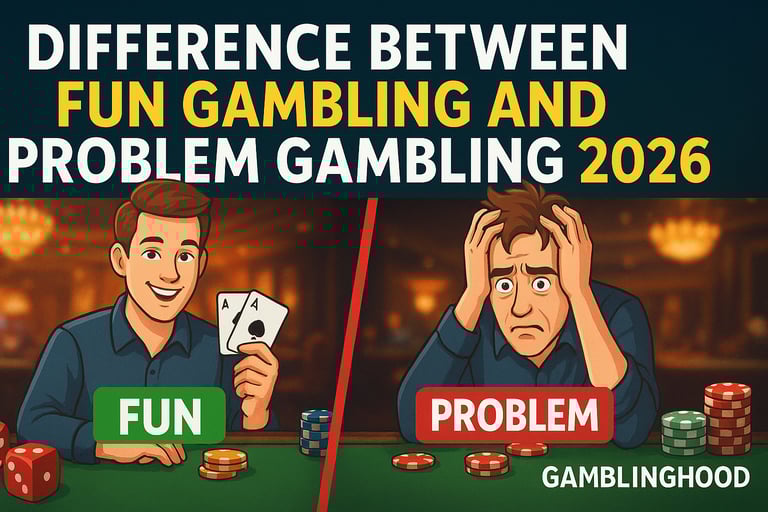
Fun gambling = you control the game
Problem gambling = the game controls you
When gambling becomes something you have to do instead of something you choose to do, the behaviour has shifted.
How Problem Gambling Sneaks Up Without Realising
In 2026, the danger is subtle because modern gambling platforms are designed to:
● personalise rewards
● keep players engaged
● remove friction
● reduce the feeling of spending
● trigger dopamine feedback loops
This makes it easy for someone to believe they’re still gambling for fun, even when their motivation has changed.
Some early signs include:
✅ staying longer than intended
✅ depositing again after losing
✅ telling yourself “just one more try”
✅ believing you are due for a win
✅ feeling restless when not playing
These are signs that gambling has shifted into emotional territory.
Emotional Differences Between Fun and Problem Gambling
Fun Gambling Emotions:
✔ enjoyment
✔ excitement
✔ social bonding
✔ amusement
✔ leisure mindset
Problem Gambling Emotions:
✖ stress
✖ anxiety
✖ urgency
✖ frustration
✖ shame
✖ relief instead of joy
When gambling becomes about relief, not fun — it has crossed the line.
Financial Differences
Fun Gambling:
✔ fixed budget
✔ acceptable losses
✔ no financial regret
Problem Gambling:
✖ spending more than planned
✖ chasing money already lost
✖ hiding spending
✖ using savings, credit, loans
Money becomes fuel for emotion, not entertainment.
Behavioural Differences
Fun Gambling:
✔ can walk away
✔ breaks naturally
✔ optional participation
Problem Gambling:
✖ playing longer than intended
✖ lying about time spent
✖ feeling compelled to return
When stopping feels uncomfortable, that’s a warning sign.
Why 2026 Makes the Difference Harder to See
Modern casino platforms now include:
● autoplay
● instant bet repeats
● rapid spins
● 24/7 access
● no need for physical cash
● reward popups
● loss-disguising animations
These features blur awareness and make losses feel less real.
How to Stay in the Fun Zone
Gamblinghood recommends:
✅ Set a spending limit before playing
✅ Set a time limit
✅ Never raise bets after losing
✅ Take breaks
✅ Avoid gambling when emotional
✅ Treat losses as entertainment cost
✅ Stop playing when it stops being fun
Fun gambling is intentional — not reactive.
When to Take Your Gambling Seriously
You should pause and reflect if:
● you gamble to change your mood
● you try to win back losses
● you feel regret afterward
● you hide your gambling
● someone close to you is concerned
Awareness is the first step toward control.
Gamblinghood Final Outlook
In 2026, the difference between fun gambling and problem gambling is more important than ever. With easy access, rapid gameplay, digital payments, and aggressive psychological design, it’s crucial for players to recognise the warning signs early.
✅ Fun gambling feels light
✅ Problem gambling feels heavy
✅ Fun gambling stops easily
✅ Problem gambling keeps pulling you back
If you gamble, make sure you do it for enjoyment — not to escape, recover, or prove something.
Stay Aware With Gamblinghood
For more:
● gambling awareness
● emotional self-check guides
● smart habits
● non-judgmental education
● safer gambling mindset
visit:
www.gamblinghood.info
and follow Gamblinghood for content that protects you — not content that encourages more gambling
© 2026 All rights reserved.
Follow us
Quick Links