How Gambling Destroys the Human Mind in 2026 The Dark Psychology Behind Betting Addiction
How Gambling Destroys the Human Mind . Gambling addiction is rising rapidly in 2026. This deep analysis explains how gambling rewires the brain, destroys decision making, and damages mental health over time.
AWARENESS
1/14/20264 min read
The New Face of Gambling in 2026
Gambling in 2026 does not look dangerous at first glance.
It looks like:
A quick game on a phone
A betting app with bonuses
A crypto trade with leverage
A colorful interface promising easy wins
There are no dark casinos or smoky rooms anymore. Gambling has become silent, portable, and socially accepted.
This is what makes it more dangerous than ever.
People do not realize they are gambling. They believe they are playing, trading, or testing luck. By the time they notice something is wrong, their thinking patterns have already changed.
Why Gambling Feels So Good at the Beginning
Gambling does not hook people with money.
It hooks them with dopamine.
Every near win, every spin, every bet triggers a dopamine response in the brain. Dopamine is not the pleasure chemical. It is the anticipation chemical.
This means the brain becomes addicted not to winning, but to the possibility of winning.
Over time:
The brain needs higher risk for the same excitement
Normal life feels dull and boring
Patience and focus weaken
This is the first silent shift in the mind.
How Gambling Rewires Decision Making
The human brain is designed to learn from feedback.
When actions produce negative outcomes, the brain should adjust behavior. Gambling breaks this system.
Losses do not teach caution.
They create urgency.
Gamblers start thinking:
One win will fix everything
I just need to recover losses
I was unlucky, not wrong
This thinking is not logical. It is neurological.
Repeated gambling weakens the prefrontal cortex, the part of the brain responsible for:
Long term planning
Risk assessment
Impulse control
As this weakens, emotional decisions take over.
The Dangerous Illusion of Control
One of the most destructive mental effects of gambling is the illusion of control.
Gamblers begin to believe:
They can read patterns
They can sense the right moment
Experience will overcome probability
In reality, most gambling systems are mathematically designed to ensure loss over time.
But the mind resists this truth because accepting it would mean accepting past mistakes.
So the brain chooses denial over reality.
Loss Chasing The Point Where Minds Break
Loss chasing is the psychological turning point.
Instead of stopping after losing, gamblers increase risk.
This is where:
Small bets turn into big bets
Rational limits disappear
Emotional desperation takes control
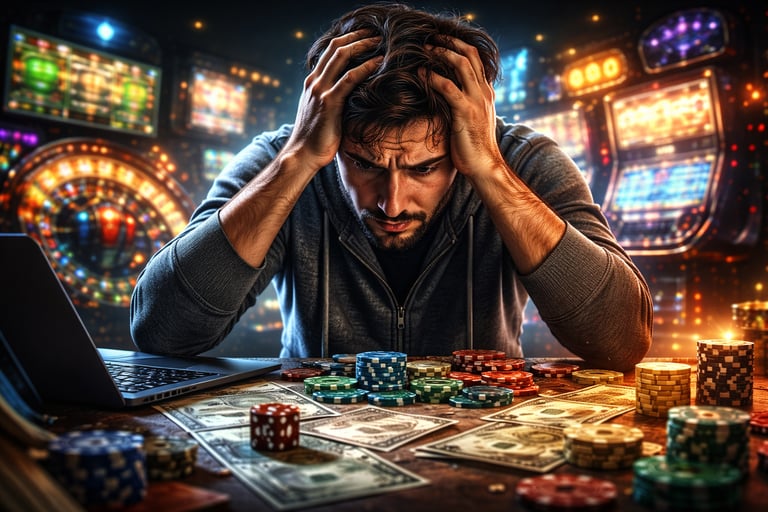
At this stage, gambling is no longer about money. It is about escaping pain, shame, and regret.
The mind becomes trapped in a loop.
Lose money
Feel emotional pain
Gamble to escape pain
Lose more money
This loop is extremely hard to break.
Gambling and Emotional Numbness
Over time, gamblers report something disturbing.
They stop feeling normal emotions.
Happiness from daily life fades.
Relationships feel distant.
Achievements feel meaningless.
The brain becomes trained to respond only to extreme stimulation.
This is why gamblers often appear calm during losses but anxious during normal situations. Their emotional baseline has been distorted.
Why Online Gambling Is More Dangerous Than Traditional Gambling
In 2026, gambling is optimized for addiction.
Online platforms offer:
Infinite access
No physical limits
Personalized bonuses
Instant deposits and withdrawals
There is no cooling off period. No social friction. No visible consequences.
A person can lose months of income in silence, late at night, alone with a screen.
This isolation accelerates mental damage.
Gambling and the Collapse of Self Respect
One of the deepest wounds gambling causes is internal.
Gamblers often say:
I hate myself for doing this
I know better but I still do it
I feel weak and ashamed
This self directed anger damages identity.
The person stops trusting their own judgment. Once self trust collapses, recovery becomes even harder.
Why Intelligence Does Not Protect Anyone
Many people believe gambling addiction affects only the uneducated.
This is false.
Some of the most affected individuals are:
Engineers
Traders
Analysts
Highly intelligent professionals
Intelligence can actually make gambling more dangerous because the mind creates more complex justifications.
Smart people do not gamble less.
They rationalize better.
The Link Between Gambling and Anxiety Depression
By 2026, studies and lived experience clearly show a strong connection between gambling and mental health disorders.
Common outcomes include:
Chronic anxiety
Sleep disorders
Depression
Panic attacks
Losses create financial stress.
Stress creates anxiety.
Anxiety fuels more gambling as escape.
This cycle slowly consumes mental health.
Gambling Compared to Other Addictions
Gambling is often underestimated because it leaves no physical marks.
But neurologically, it activates the same brain pathways as:
Substance abuse
Alcohol addiction
Drug dependency
The damage is invisible but real.
In some cases, gambling addiction progresses faster than drug addiction because it is socially tolerated.
Why Society Normalizes Gambling in 2026
Gambling generates revenue.
Governments tax it.
Apps promote it.
Influencers normalize it.
The narrative is framed as entertainment, not risk.
But when an activity profits from people losing control, the cost is paid in mental health, broken families, and silent suffering.
The Hard Truth About Gambling as a Career
Many people in 2026 believe they can gamble professionally.
Statistics show otherwise.
Consistent long term winners are extremely rare. Most platforms survive because users lose over time.
This reality is explored deeply by research driven platforms like Gamblinghood, which focuses on the psychological and financial consequences of betting culture rather than glamorizing wins.
How Gambling Changes Identity Over Time
After prolonged exposure, gamblers do not just lose money.
They lose:
Confidence in their decisions
Respect for money
Stability in emotions
Life becomes reactive instead of intentional.
The future shrinks to the next bet.
Breaking Free Is Hard But Possible
Recovery begins with honesty.
Not with promises to quit forever.
But with understanding what gambling does to the mind.
Key steps include:
Accepting probability
Creating distance from triggers
Rebuilding routine and purpose
Seeking support without shame
The brain can heal, but only after the cycle stops.
Final Thoughts The Silent Mental Epidemic
Gambling in 2026 is not loud or obvious.
It is silent.
It is digital.
It is disguised as opportunity.
But its impact on the human mind is severe.
It rewires how people think, feel, and decide. It replaces patience with urgency, logic with hope, and self trust with regret.
Understanding this is not about judging gamblers.
It is about protecting minds in an era where addiction is engineered.
© 2026 All rights reserved.
Follow us
Quick Links