
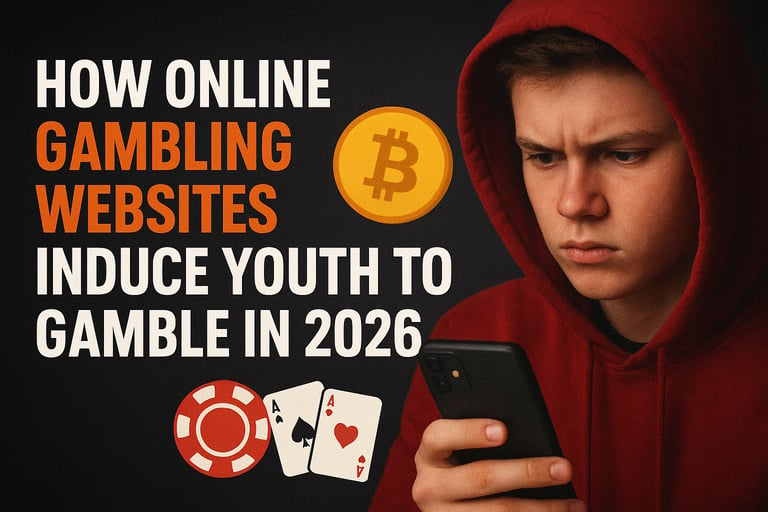
How Online Gambling Websites Induce Youth to Gamble in 2026 – A Deep Dive | Gamblinghood Exclusive
Discover how modern online gambling platforms use marketing psychology, influencer culture, and AI-driven strategies to attract young audiences in 2026. A detailed Gamblinghood exclusive exposing the hidden tactics behind the rise in youth gambling addiction.
AWARENESS
11/4/20255 min read
Introduction: The Rising Storm of Online Gambling Among Youth
The online gambling industry in 2026 has grown into a multi-billion-dollar global phenomenon. What was once confined to smoky casinos and betting parlors is now accessible through smartphones, tablets, and even virtual reality devices. Unfortunately, this accessibility has opened the doors for a new wave of gamblers — the youth.
According to recent Gamblinghood research, over 35% of new online gamblers in 2026 are under the age of 25. This surge isn’t accidental. It’s the result of a sophisticated web of digital marketing tactics, AI-powered engagement tools, and the psychological manipulation of young minds hungry for quick rewards and social validation.
This blog dives deep into how online gambling websites deliberately target youth, the psychological triggers they exploit, and what can be done to counter these predatory methods.
1. The Digital Transformation of Gambling
The gambling industry has transformed drastically over the past decade. In 2026, most gambling happens not in casinos, but online — via apps, esports betting sites, crypto casinos, and even social media-integrated platforms.
Modern gambling websites don’t just offer poker or roulette; they offer gamified experiences. From “loot boxes” in games to “spin and win” wheels on streaming platforms, gambling has been rebranded as entertainment.
What’s more alarming is the ease of entry. A few taps, a crypto wallet, and a teenager can start betting instantly — no verification required. Many offshore sites intentionally skip age checks, using decentralized payment systems to bypass regulations.
2. The Power of Psychology: How Youth Are Lured In
Gambling websites are no longer simply about odds — they’re built on behavioral science. Here’s how they manipulate the minds of young players:
a) The Illusion of Control
Gamblers often believe that skill determines their success. But most online games use Random Number Generators (RNGs) that make winning purely a matter of luck. Still, visual cues — like flashing lights, near misses, and “you almost won” messages — trick the brain into thinking control is possible.
b) Dopamine Triggers
Every spin, every bet, every win releases dopamine — the same “pleasure chemical” linked to drug addiction. Youth are particularly susceptible because their brains are still developing self-control and risk assessment mechanisms.
c) Variable Rewards
Online gambling platforms use variable ratio reinforcement, a psychological principle also used by social media apps. You never know when the next win will come — and that uncertainty keeps users hooked.
3. Social Media and Influencer Endorsements
In 2026, gambling promotion has infiltrated TikTok, YouTube, Twitch, and Instagram. Young influencers often partner with betting companies to promote “fun challenges” or “free spin codes.”
These videos often feature flashy cars, luxury vacations, and “overnight success” stories — all of which paint gambling as a fast track to wealth and freedom.
Worse, influencers disguise sponsorships as organic content. Viewers rarely realize that the influencers are paid to make gambling seem glamorous.
According to Gamblinghood’s digital behavior study, over 60% of youth who tried online gambling in 2025 first encountered it through influencer content.
4. The Role of AI and Data Analytics
AI is the backbone of modern online gambling. Every click, bet, and pause is recorded. Using predictive algorithms, gambling sites identify when users are most vulnerable — such as after a near miss or loss streak.
AI then customizes offers:
“Special bonus for your next spin!”
“Claim a 200% deposit match before midnight!”
“You’re just one win away from your next tier!”
These personalized nudges create a sense of urgency and push users — especially impulsive youth — to keep spending.
AI doesn’t just predict addiction — it feeds it.
5. The Role of Gamification
Gamification blurs the line between gaming and gambling. Youth who grow up playing online games are already conditioned to chase achievements and rewards.
Gambling sites use similar mechanics:
Leveling systems
Loyalty badges
Leaderboards
Daily rewards
“Mystery boxes”
When these familiar features combine with real money stakes, it becomes an addictive hybrid experience.
Crypto casinos in 2026 have taken this further by integrating gambling into metaverse worlds. Virtual casinos with avatars, VR slots, and NFT rewards make the experience immersive — and dangerously engaging.
6. Financial Manipulation: Making It Look Easy
Gambling sites know that youth have limited funds. So, they introduce micro-betting — small, frequent wagers that feel harmless but add up over time.
Additionally, easy payment gateways like UPI, PayPal, or crypto wallets remove the “pain” of spending. No longer do players hand over cash — they just tap a screen.
Some sites even offer credit-based betting, allowing users to play now and pay later — a dangerous trap that can lead to early debt cycles.
7. Peer Pressure and Online Communities
Online gambling communities make youth feel like part of something bigger. Discord servers, Reddit threads, and Telegram groups are filled with young gamblers sharing wins, strategies, and excitement.
These spaces normalize gambling — making it feel like a hobby rather than a risk.
A 2026 Gamblinghood analysis found that online community participation increases gambling frequency by over 40% among youth.
The “fear of missing out” (FOMO) drives players to bet more just to stay part of the group.
8. The Role of Esports and Crypto Betting
The explosion of esports and crypto-based gambling has made youth gambling more accessible and socially acceptable.
Esports betting allows users to wager on games like Valorant, CS:GO, and Fortnite — all popular among teenagers. With cryptocurrency integration, these bets are instant, anonymous, and borderless.
Crypto casinos often promise “decentralized fairness”, but in reality, many are unregulated. They market themselves as futuristic, safe, and profitable — appealing directly to tech-savvy young investors who confuse risk with innovation.
9. The Cost: Addiction, Debt, and Mental Health
Behind every “fun spin” is a darker reality. Youth addicted to online gambling face severe consequences — financial instability, academic decline, depression, and strained relationships.
Many studies link gambling addiction with increased anxiety, impulsivity, and risk-taking behavior. Some even resort to taking loans or using parents’ cards without consent.
According to Gamblinghood’s 2026 Global Addiction Survey, nearly 18% of youth gamblers show signs of compulsive behavior within their first three months.
10. Regulatory Loopholes and Lack of Awareness
While countries try to regulate gambling, online platforms often operate from offshore jurisdictions. They exploit gray areas in international law and accept cryptocurrencies to bypass banking scrutiny.
Even AI age-detection tools fail easily — with fake IDs or digital wallets that don’t require personal details.
The lack of enforcement allows these platforms to continue targeting youth without consequence.
11. What Parents and Society Can Do
Preventing youth gambling requires collective action — not just regulation. Here’s how:
Education: Schools must include digital addiction and gambling awareness programs.
Parental Monitoring: Parents can use app trackers and wallet controls to monitor suspicious activity.
Awareness Campaigns: Influencers and platforms should be held accountable for promoting gambling to minors.
Self-Exclusion Tools: Governments should enforce strict self-ban mechanisms on all gambling websites.
Awareness and open communication are the strongest defenses against manipulation.
12. The Future Outlook – 2026 and Beyond
As technology evolves, gambling will continue to integrate with entertainment and social platforms. Virtual reality casinos, blockchain-based lotteries, and even AI betting assistants will become mainstream.
But if unchecked, the psychological and financial damage among youth will grow exponentially.
Organizations like Gamblinghood are now advocating for responsible gambling policies, transparency in ad campaigns, and youth-focused awareness drives worldwide.
Conclusion: The Hidden War for Attention
In 2026, online gambling websites have mastered the art of attention capture — and youth are their prime targets. Through gamification, AI, social media, and financial manipulation, they create a world where losing feels like “just one more try.”
The truth is simple yet alarming:
These platforms don’t sell entertainment — they sell addiction.
To fight back, society needs awareness, regulation, and responsibility. Because the future of our youth depends not just on what they win — but on what they don’t lose.
© 2026 All rights reserved.
Follow us
Quick Links