
How to Do Gambling Like a Business in 2026 – The Only Way to Stay Profitable
Learn how to treat gambling like a real business in 2026. Gamblinghood explains the professional mindset, bankroll systems, compounding methods, and data tracking strategies that separate winners from casual players. Stop playing emotionally—start operating like an entrepreneur of risk.
CASINO TIPS
11/1/20254 min read
How to Do Gambling Like a Business: The Only Way to Stay Profitable in 2026
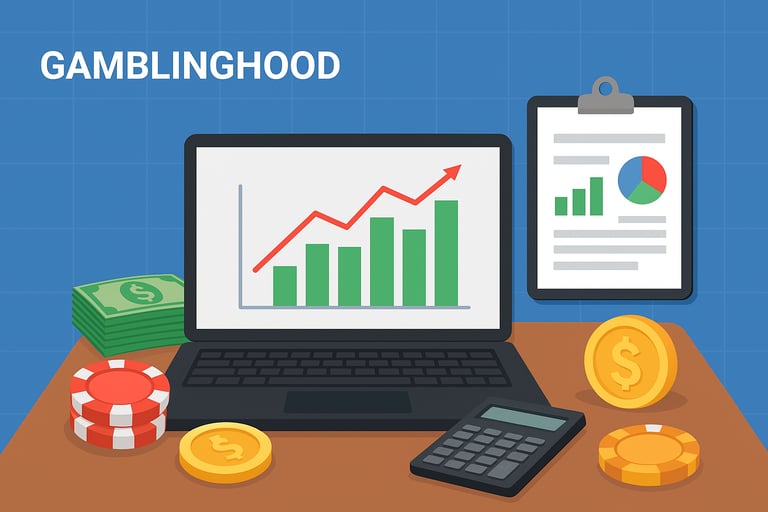
In 2026, gambling has transformed from a pastime into an industry worth billions. From casinos to online platforms, people are constantly seeking that one golden strategy to stay profitable. But here’s the truth — the only way to win consistently in gambling is to treat it like a business, not a game.
If you gamble emotionally, chase losses, or rely on luck, you’re playing to lose. But if you apply structure, planning, and discipline — just like a business owner — you can transform gambling into a calculated investment opportunity. This is the Gamblinghood approach to long-term profitability.
The Business Mindset in Gambling
A businessman never invests without analyzing risk, predicting trends, and managing capital. Similarly, a professional gambler studies odds, tracks patterns, and allocates money strategically.
Think of gambling as a market — not much different from stock trading or crypto investing. Every bet is a transaction, every risk must be managed, and every decision should be data-driven.
Here’s the key difference between casual gamblers and professionals:
Casual gamblers hope to win.
Professional gamblers calculate how to win.
When you adopt this mindset, you stop gambling for excitement and start gambling for growth.
Step 1: Build Your Gambling Business Plan
Every successful business starts with a plan. The same applies here. Before you place your first bet, answer these questions:
What’s your monthly bankroll?
What games or sports will you focus on?
What’s your expected ROI (return on investment) per week or month?
What’s your risk tolerance?
How will you track performance and adjust strategy?
A plan gives you structure and clarity. For example, if your goal is a 10% monthly ROI on a ₹50,000 bankroll, that’s ₹5,000 profit. Once you hit that goal, stop betting for the month. Businesses set profit targets — gamblers should too.
Step 2: Master Bankroll Management
If gambling is your business, your bankroll is your capital. Protect it like your life depends on it.
Follow the 5% Rule — never risk more than 5% of your total bankroll on a single wager. For example, if you have ₹50,000, the maximum stake per bet should be ₹2,500. This keeps you alive even if you hit a losing streak.
Another smart method is the compound growth technique. Reinvest a small part of your profits each week to increase your capital slowly. It’s the same principle successful traders and investors use to grow wealth.
Example:
Week 1: ₹50,000 → ₹55,000
Week 2: ₹55,000 → ₹60,500
Week 3: ₹60,500 → ₹66,550
This slow, steady growth beats all risky “double your money overnight” strategies.
Step 3: Specialize in One Game or Market
Businesses thrive when they specialize. The same goes for gambling. Don’t try to master everything — pick one area and dominate it.
Examples:
Sports bettors can focus only on cricket or football.
Casino players can focus on blackjack, where skill matters.
Poker pros focus on tournaments and opponent psychology.
When you specialize, you learn patterns, odds, and psychological tendencies that outsiders miss. This expertise becomes your competitive edge, just like a business niche.
Step 4: Track Every Bet Like a Ledger
Every business tracks profits and losses. You must do the same.
Keep a Gambling Ledger — a spreadsheet of:
Date
Type of bet
Stake amount
Odds
Result (win/loss)
Profit/loss total
Over time, this data shows your performance trends. You’ll know which strategies work, which markets are profitable, and where you need improvement.
Remember: What gets measured gets improved.
Step 5: Learn Risk Control and Emotional Management
Businesses fail when owners panic during downturns — gamblers fail for the same reason.
The key to staying profitable is emotional control.
Here are business-style risk management rules for gambling:
Never chase losses — it’s emotional suicide.
Set stop-loss limits — decide the maximum you’ll lose in one day or week.
Diversify bets — don’t put everything in one outcome.
Take breaks — emotional fatigue causes poor judgment.
Winning gamblers treat losing days as “operational costs,” not personal failures.
Step 6: Analyze Data and Improve Strategy
Every modern business uses analytics to stay ahead. As a gambler, you must too.
Track your performance monthly and identify patterns like:
Which days or leagues give better results
Which odds range is most profitable
Which emotional states cause bad decisions
You can even use simple tools like Excel or online bet trackers. Analyze, refine, and adapt — that’s how a business stays profitable in competitive markets.
Step 7: Build Passive Income from Gambling
Once you’re consistent, you can turn gambling into a semi-passive business.
Examples:
Create a small betting group where you earn commissions.
Sell predictions or tips responsibly.
Run analytics-based Telegram or website platforms like Gamblinghood.
Affiliate with online platforms for extra earnings.
This diversifies your income streams and reduces dependency on wins.
Step 8: The Psychology of a Gambling Entrepreneur
Professional gamblers think long-term. They’re not thrilled by one big win — they’re focused on sustainable profits.
Cultivate these traits:
Patience: Wait for the right opportunity.
Discipline: Stick to rules and limits.
Adaptability: Change strategy as trends evolve.
Detachment: Don’t attach emotions to wins or losses.
Remember, gambling isn’t about excitement — it’s about execution.
Step 9: Use Technology and AI Tools
2026 is the age of AI-driven predictions. Platforms like Gamblinghood are helping users make data-backed decisions. You can use:
AI odds trackers to find the best opportunities.
Bet simulators to test strategies before real money.
Auto spreadsheets for instant analytics.
Tech doesn’t guarantee wins — but it guarantees smarter decisions.
Step 10: Treat It Like a Real Business
Here’s the ultimate summary:
Capital = Bankroll
Expenses = Losses
Revenue = Wins
Profit = Net gain after risk and management
Just like any business, your goal isn’t to win every time. It’s to make consistent profits over time.
When you approach gambling this way, you stop playing emotionally and start playing strategically.
Final Words — The Gamblinghood Philosophy
Luck might open a few doors, but discipline, analysis, and business mindset keep them open. Gambling can be a profitable career — but only when you treat it like a business, not a thrill.
In 2026 and beyond, the world of gambling will continue evolving with AI, analytics, and professional competition. To stay ahead, follow the Gamblinghood way — build structure, respect data, and manage emotions.
Remember, fortune favors those who plan.
Turn gambling into your business — and profits will follow.
© 2026 All rights reserved.
Follow us
Quick Links