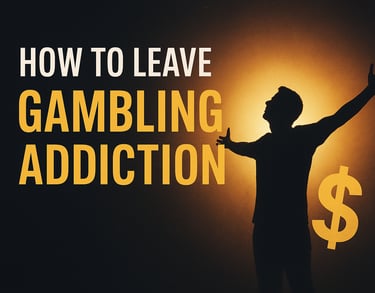
How to Leave Gambling Addiction in 2026 — Complete Recovery Guide by GamblingHood
GamblingHood presents a 2026 recovery guide to help you overcome gambling addiction. Learn practical steps, financial healing methods, and spiritual strategies to regain control and live a happier, addiction-free life.
AWARENESS
11/2/20253 min read
How to Leave Gambling Addiction in 2026 — Complete Recovery Guide by GamblingHood
Gambling is designed to thrill the brain — that rush, that “next win,” that false sense of control. But over time, it can destroy your peace, finances, and relationships. In 2026, addiction recovery has evolved with new awareness, digital support systems, and mindset training.
This guide by GamblingHood will help you understand how to recognize addiction, reprogram your mind, and rebuild your life after gambling — one step at a time.
1. Understanding Gambling Addiction
Gambling addiction isn’t just about losing money — it’s about losing control. The mind becomes addicted to dopamine, the “pleasure chemical,” released when you take risks. The thrill becomes the drug.
People with gambling addiction often tell themselves they’re just “having fun” or that they can “win it all back.” But the truth is, the house always wins — and the only real victory is quitting.
Recognizing it as a psychological and emotional dependency — not a weakness — is the first big step toward freedom.
2. Common Signs You’re Addicted to Gambling
If you’ve ever wondered whether gambling has gone too far, check if any of these feel familiar:
You think about betting every day.
You hide gambling from your friends or family.
You chase losses, believing the next game will make it right.
You borrow or use credit cards to fund gambling.
You feel restless or anxious when you try to stop.
You lie to cover your losses or time spent gambling.
If more than two of these apply, it’s time to be honest with yourself — you may be addicted.
3. Why It’s So Hard to Quit
According to GamblingHood, quitting isn’t just about willpower — it’s about breaking a brain loop.
Each time you gamble, you teach your brain that risk = excitement = pleasure.
Here’s what keeps you trapped:
The Dopamine Rush: The thrill is addictive, win or lose.
The “Almost Win” Effect: Games are designed to keep you playing.
The Illusion of Control: You think you can “outsmart” luck.
Chasing Losses: You keep gambling to undo the damage.
To escape, you must retrain your brain to get pleasure from real life — not from the spin of a wheel or the roll of dice.
4. Steps to Leave Gambling Addiction Behind
Step 1: Admit You Have a Problem
Denial is the biggest wall between you and recovery. Acknowledge that gambling has taken more than it’s given.
Step 2: Cut Off Access
Delete all gambling apps, block betting websites, and ask your bank to limit payments to gambling platforms.
Step 3: Replace the Habit
Find a healthy alternative that excites you — like gym workouts, travel, or learning new skills. Rebuild your dopamine system naturally.
Step 4: Manage Cravings with Awareness
When the urge hits, delay the action. Urges come like waves — they rise and fall. Don’t fight them; let them pass.
Step 5: Build a Support System
Talk to friends, family, or join online communities like GamblingHood Recovery Circles, where people share success stories and support each other.
Step 6: Set Financial Boundaries
Give someone you trust control over your finances temporarily. Create a savings plan with clear weekly limits.
Step 7: Seek Professional Help
Therapists specializing in gambling addiction can help you rewire your thinking patterns through CBT (Cognitive Behavioral Therapy).
5. Spiritual and Emotional Healing
Gambling isn’t just financial damage — it wounds your spirit. In 2026, more people are turning to mindfulness, meditation, and yoga to heal their inner restlessness.
Daily practices to rebuild calm:
Morning Meditation (10 mins): Focus on gratitude.
Journaling: Write one reason every day why you’re choosing peace over addiction.
Spiritual Reading: Study teachings that remind you of balance and purpose.
Your recovery journey is also a spiritual awakening — you’re not just quitting gambling, you’re reclaiming yourself.
6. Financial Recovery After Quitting Gambling
Once you stop gambling, the next challenge is rebuilding your finances. Start small but consistent:
Track every expense for 90 days.
Save a fixed percentage from income.
Avoid “get rich quick” schemes — they trigger old habits.
Invest wisely in long-term options.
The goal isn’t to become instantly rich again — it’s to become stable, calm, and confident.
7. How to Stay Strong in 2026
Even after quitting, urges may return. Here’s how to stay in control:
Stay away from gambling content or sports betting ads.
Reward yourself for every milestone (1 week, 1 month, 6 months clean).
Keep visual reminders of your progress — like debt-free receipts or family photos.
Join GamblingHood’s 2026 “Quit & Grow” online challenge for community motivation.
8. Life After Gambling
Once you break free, you’ll realize how much more life offers — better relationships, inner peace, and financial security.
Your energy returns. Your confidence grows. Your mind clears.
The same passion you once had for gambling can now fuel success, creativity, and purpose.
Final Thoughts from GamblingHood
In 2026, the world of gambling will keep evolving — but so will your strength to resist.
Remember: addiction isn’t about luck; it’s about choice. Every time you say no to gambling, you say yes to your life.
If you’re ready to take back control, start today — not tomorrow.
GamblingHood 2026 Recovery Message:
“You can’t control the cards life deals, but you can control how you play them.”
Choose peace. Choose purpose. Choose freedom.
© 2026 All rights reserved.
Follow us
Quick Links