Lost Everything in Gambling in 2026: Real Ways to Recover From Pain, Rebuild Your Life, and Start Again With GamblingHood
Lost everything in gambling and feeling broken in 2026? This in-depth recovery guide with GamblingHood perspective explains how to heal emotional pain, regain financial control, and rebuild a stable life step by step.
CASINO TIPS
1/11/20264 min read
Introduction: When Gambling Takes Everything From You
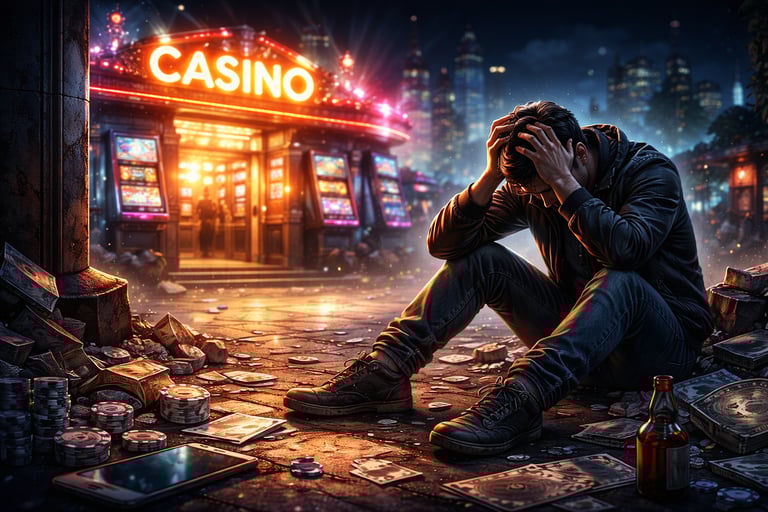
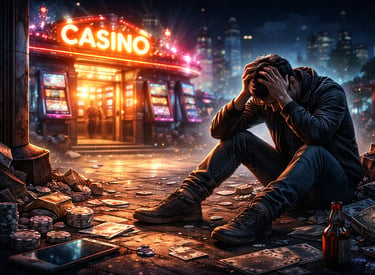
Losing everything in gambling is not just a financial collapse. It is an emotional, psychological, and identity-level breakdown. In 2026, gambling has become more accessible than ever—online casinos, sports betting apps, crypto casinos, and instant-play platforms operate 24/7. The speed at which money is lost has increased, but the pain remains deeply human.
If you are reading this, chances are you are not looking for betting strategies or “one last chance” systems. You are hurting. You may feel shame, guilt, anger, fear, or numbness. You may have lost savings, relationships, self-respect, or years of hard work. This article exists for one reason: to help you understand that recovery is possible and to show you practical, realistic steps to begin healing.
This is not motivation talk. This is a recovery framework grounded in reality and aligned with the harm-awareness philosophy promoted by GamblingHood.
Understanding the Pain: Why Gambling Loss Hurts Differently
Gambling pain cuts deeper than many other financial losses. When a business fails or an investment crashes, people often accept market risk. Gambling is different because the loss feels personal. You chose to press the button, place the bet, or spin the wheel.
This leads to unique emotional wounds:
Intense self-blame and shame
Obsessive replaying of losses
Feeling “stupid” or “weak”
Fear of judgment from family and society
Loss of trust in your own decisions
In 2026, social media worsens this pain. You constantly see screenshots of wins, jackpots, and influencers claiming easy money. This creates the illusion that everyone else is winning while you alone failed. That belief is false, but emotionally convincing.
Before recovery begins, one truth must be accepted: gambling addiction is not a character flaw. It is a behavioral trap designed around dopamine, variable rewards, and psychological conditioning.
Step One: Stop the Bleeding Before You Heal
Recovery cannot begin while losses are still happening. Emotional healing requires stability, not ongoing damage.
This does not mean “control your gambling.” It means stopping completely, at least temporarily. In 2026, this requires deliberate action:
Self-exclude from betting platforms and casinos
Delete gambling apps and block related websites
Hand over financial control temporarily if necessary
Avoid triggers such as live sports betting content
Many people resist this step because stopping feels like admitting defeat. In reality, stopping is the first act of strength. You are not quitting life; you are choosing survival.
Step Two: Accept the Loss Without Trying to Undo It
One of the most destructive thoughts after losing everything is: “I must get it back.”
This belief keeps people trapped for years. Chasing losses does not restore dignity, money, or peace. It multiplies pain.
Acceptance does not mean approval. It means acknowledging reality as it is right now:
The money is gone
The past cannot be edited
The lesson can still be valuable
In 2026, many people attempt to recover gambling losses through crypto trading, high-risk leverage, or new forms of speculative behavior. This often turns one addiction into another.
True acceptance is painful, but it is also freeing. Once you stop trying to reverse the past, your energy becomes available for rebuilding the future.
Step Three: Separate Your Identity From Your Mistakes
A common internal sentence among gambling sufferers is: “I ruined my life.”
This is not accurate. You made decisions under psychological pressure and engineered systems. You are not those decisions.
In recovery, language matters. Begin replacing identity statements with factual ones:
Not “I am a loser,” but “I experienced a serious loss”
Not “I destroyed everything,” but “I am in a rebuilding phase”
Not “I am weak,” but “I was exposed to addictive mechanisms”
In 2026, neuroscience and behavioral economics clearly explain how gambling hijacks decision-making. Understanding this does not remove responsibility, but it removes unnecessary self-hatred.
Step Four: Rebuild Financial Reality Slowly and Honestly
When everything is lost, people often want fast recovery. Ironically, this desire mirrors gambling itself.
Real financial recovery is slow, boring, and predictable. That is exactly why it works.
Start with clarity:
List all debts and obligations
Accept your current net worth, even if it is zero or negative
Stop comparing yourself to others
Then rebuild through stable actions:
Focus on steady income, not quick money
Reduce lifestyle expenses without self-punishment
Set small, achievable financial goals
In 2026, many recovery paths involve skill-based income: digital services, remote work, freelancing, or learning practical trades. Money earned through effort heals the relationship with self-worth in a way gambling never can.
Step Five: Address the Emotional Wound, Not Just the Money
Many people stop gambling but remain emotionally broken. They still feel empty, restless, or anxious. This is because gambling was not just about money. It was an emotional escape.
Ask yourself honestly:
What feeling did gambling give me?
Control? Hope? Excitement? Escape?
What pain was I avoiding?
Recovery requires replacing the emotional function of gambling with healthier outlets:
Physical activity to regulate stress
Structured routines to reduce impulsivity
Creative or skill-based focus to rebuild confidence
In 2026, mental health awareness around gambling has improved, but stigma still exists. Speaking to a therapist, counselor, or support group is not weakness. It is strategic recovery.
Step Six: Repair Relationships Without Demanding Forgiveness
Gambling often damages trust. Family members and partners may feel betrayed, lied to, or exhausted.
Recovery does not mean asking for instant forgiveness. It means demonstrating consistency over time.
Effective repair includes:
Honest admission without excuses
Clear boundaries around money
Patience with others’ emotions
Acceptance that some relationships may not return
Trust is rebuilt through behavior, not words. In many cases, simply becoming emotionally present and reliable again is enough to begin healing connections.
Step Seven: Redefine Success in 2026
One hidden danger in recovery is replacing gambling obsession with hustle obsession. If your only measure of success is money, pressure will return.
Redefine success to include:
Emotional stability
Peaceful sleep
Control over impulses
Self-respect
In 2026, real success is not about flex culture or overnight wealth. It is about sustainability. A calm life beats a chaotic rich illusion.
Step Eight: Use the Pain as a Boundary, Not a Punishment
Many people try to punish themselves forever for gambling losses. This leads to lifelong guilt.
Pain should be used as a boundary instead:
“I never want to feel this again”
“I protect my future self from this risk”
“I choose safety over excitement”
This mindset aligns with the harm-awareness approach encouraged by GamblingHood: understanding gambling realistically, without glamor, denial, or moral judgment.
What Recovery Really Looks Like After Losing Everything
Recovery is not dramatic. There is no sudden breakthrough day where everything feels fixed.
Real recovery looks like:
Weeks without gambling thoughts, then sudden triggers
Progress mixed with emotional setbacks
Gradual return of confidence
Quiet pride in stability
Most importantly, recovery looks like living again without constant mental noise.
Final Words: Your Life Is Not Over in 2026
Losing everything in gambling can feel like the end of your story. It is not.
It is a painful chapter, but not the final one. Many people who have lost everything go on to live calmer, more meaningful lives than they ever had before gambling.
You are not broken beyond repair. You are injured, and injuries can heal with time, structure, and honesty.
If this article reached you at a dark moment, remember this: the fact that you are searching for recovery means part of you still believes in a future. That part is right.
Your next step does not need to be big. It only needs to be real.
© 2026 All rights reserved.
Follow us
Quick Links