
The Ancient Gambling Story from Mahabharata That Still Warns Gamblers Today
Thousands of years ago, a single gambling game in the Mahabharata led to humiliation, betrayal, and eventually one of the greatest wars in history. The story of Yudhishthira and the deadly dice game carries a powerful warning about gambling, greed, and consequences that still feels relevant in the modern world.
AWARENESS
3/7/20264 min read
A Game of Dice That Changed History
Thousands of years ago, a simple game of dice changed the fate of an entire kingdom.
It was not played in a casino or a gambling hall.
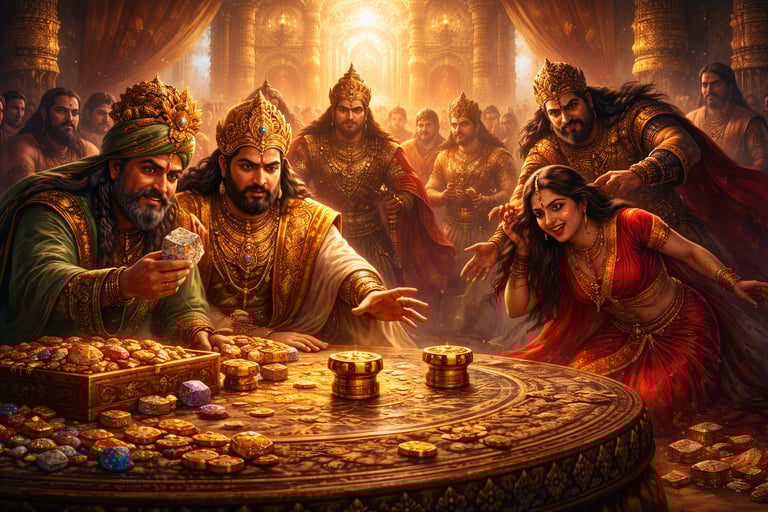
It was played in the royal court of Hastinapur.
The story comes from the ancient Indian epic Mahabharata, a text that contains powerful lessons about human behavior, greed, power, and destiny.
What started as a royal invitation to play a friendly game quickly turned into a disaster that destroyed families, humiliated a queen, and eventually led to the massive Kurukshetra war.
At the center of this story was a king known for his righteousness and truthfulness — Yudhishthira, the eldest of the Pandava brothers.
Yet even a virtuous king could not escape the dangers of gambling.
The Jealousy That Sparked the Game
Before the infamous dice game took place, the Pandavas had built a magnificent kingdom called Indraprastha.
Their city was prosperous, powerful, and admired by many kings.
But not everyone was happy about their success.
Duryodhana, the eldest prince of the Kauravas, felt deep jealousy when he visited the Pandavas' palace.
The wealth and power of the Pandavas made him feel inferior.
Instead of improving himself or strengthening his own kingdom, Duryodhana decided to destroy the Pandavas through cunning and manipulation.
And he knew exactly how to do it.
Yudhishthira’s Weakness
Yudhishthira was respected for his honesty and strong sense of dharma.
But like every human being, he had a weakness.
He loved playing dice.
In ancient times, dice games were a common form of entertainment among kings and nobles.
However, these games often carried serious risks.
Duryodhana understood this weakness and planned to use it against him.
He invited the Pandavas to the royal court for a grand gambling match.
According to royal custom, refusing such an invitation would have been considered disrespectful.
So Yudhishthira accepted the challenge.
What he did not realize was that the entire game had already been planned as a trap.
The Most Dangerous Gambler in the Kingdom
Duryodhana did not intend to gamble personally.
Instead, he asked his uncle Shakuni to play on his behalf.
Shakuni was not an ordinary player.
He was known for his intelligence, manipulation, and extraordinary skill with dice.
Many versions of the story describe how Shakuni used loaded dice, ensuring that the outcome always favored him.
From the very beginning, the game was unfair.
But Yudhishthira continued playing.
The First Losses
At the start of the game, Yudhishthira placed relatively small bets.
Gold coins.
Jewels.
Precious ornaments.
Each time the dice rolled, Shakuni won.
The court began to notice that something was wrong.
But the game continued.
Yudhishthira believed that the next round might change his luck.
This belief is one of the most common traps in gambling.
Many gamblers convince themselves that the next bet will recover their losses.
Instead, the losses usually grow larger.
When the Stakes Became Dangerous
As the game progressed, Yudhishthira’s bets became bigger.
He gambled his wealth.
He gambled his royal treasures.
He gambled his palace.
And every time, he lost.
The atmosphere inside the royal court became tense.
Many elders present in the court felt uncomfortable, but few dared to interfere.
The dice continued rolling, and Yudhishthira continued losing.
Then came the moment that shocked everyone.
Gambling Away a Kingdom
After losing his wealth and property, Yudhishthira made a devastating decision.
He gambled his entire kingdom.
The kingdom of Indraprastha, built through years of effort and sacrifice, was placed on the dice board.
And once again, Shakuni won.
With that single roll, the Pandavas lost their kingdom.
But the tragedy did not end there.
The Unthinkable Bets
Instead of stopping the game, Yudhishthira continued gambling.
In desperation, he began placing unimaginable bets.
First, he gambled his brothers.
One by one, the Pandava brothers were lost in the game.
Then he gambled himself.
He lost again.
By this point, the great king had lost everything — his wealth, his kingdom, his family, and even his own freedom.
But the most shocking moment was yet to come.
The Humiliation of Draupadi
After losing himself, Yudhishthira made the most tragic bet of all.
He gambled Draupadi, the queen of the Pandavas.
Shakuni rolled the dice once again.
And once again, he won.
Draupadi was dragged into the royal court and humiliated in front of everyone.
This moment became one of the most emotional and disturbing scenes in the entire Mahabharata.
It exposed the destructive power of greed, pride, and addiction.
The silence of the elders in the court also revealed how dangerous it can be when people fail to stand against injustice.
The Beginning of the Great War
The humiliation of Draupadi and the betrayal during the dice game created deep wounds between the Pandavas and the Kauravas.
Eventually, these events led to the Kurukshetra war, one of the greatest battles described in ancient literature.
Millions of warriors fought on the battlefield.
Entire dynasties were destroyed.
And it all began with a single gambling game.
The Powerful Lesson for Modern Gamblers
The story of Yudhishthira’s gambling loss carries an important lesson that still applies today.
Gambling often begins as entertainment.
But when it becomes driven by greed, pride, or desperation, it can lead to devastating consequences.
The Mahabharata shows how a single weakness can destroy even the strongest individuals.
It also reminds us that addiction can affect anyone, regardless of their status, intelligence, or virtue.
Why This Story Still Matters Today
Even though the Mahabharata was written thousands of years ago, its lessons remain incredibly relevant.
Modern gambling platforms, casinos, and online betting apps have made gambling more accessible than ever.
Many people begin gambling casually but slowly become trapped in cycles of losses and attempts to recover money.
The ancient story of the dice game serves as a powerful warning about these dangers.
It reminds us that wisdom, self-control, and awareness are essential in avoiding destructive habits.
The Deeper Message of the Mahabharata
Beyond the gambling lesson, the Mahabharata teaches deeper truths about human nature.
It shows how jealousy can destroy relationships.
It shows how silence in the face of injustice can lead to tragedy.
And it shows how even great kings can make devastating mistakes when they lose control of their decisions.
These lessons continue to resonate with readers even thousands of years later.
Final Thoughts
The dice game of the Mahabharata is more than just an ancient story.
It is a timeless warning about the dangers of gambling, pride, and manipulation.
A single moment of weakness led to the destruction of kingdoms and the outbreak of war.
For modern readers and gamblers, this story remains a powerful reminder that choices made in moments of temptation can have consequences far beyond what we imagine.
The ancient epic continues to teach that wisdom, discipline, and self-awareness are essential in navigating life’s temptations.
And sometimes, the greatest victory is knowing when not to play the game at all.
A Game of Dice That Changed History
Thousands of years ago, a simple game of dice changed the fate of an entire kingdom.
It was not played in a casino or a gambling hall.
It was played in the royal court of Hastinapur.
The story comes from the ancient Indian epic Mahabharata, a text that contains powerful lessons about human behavior, greed, power, and destiny.
What started as a royal invitation to play a friendly game quickly turned into a disaster that destroyed families, humiliated a queen, and eventually led to the massive Kurukshetra war.
At the center of this story was a king known for his righteousness and truthfulness — Yudhishthira, the eldest of the Pandava brothers.
Yet even a virtuous king could not escape the dangers of gambling.
The Jealousy That Sparked the Game
Before the infamous dice game took place, the Pandavas had built a magnificent kingdom called Indraprastha.
Their city was prosperous, powerful, and admired by many kings.
But not everyone was happy about their success.
Duryodhana, the eldest prince of the Kauravas, felt deep jealousy when he visited the Pandavas' palace.
The wealth and power of the Pandavas made him feel inferior.
Instead of improving himself or strengthening his own kingdom, Duryodhana decided to destroy the Pandavas through cunning and manipulation.
And he knew exactly how to do it.
Yudhishthira’s Weakness
Yudhishthira was respected for his honesty and strong sense of dharma.
But like every human being, he had a weakness.
He loved playing dice.
In ancient times, dice games were a common form of entertainment among kings and nobles.
However, these games often carried serious risks.
Duryodhana understood this weakness and planned to use it against him.
He invited the Pandavas to the royal court for a grand gambling match.
According to royal custom, refusing such an invitation would have been considered disrespectful.
So Yudhishthira accepted the challenge.
What he did not realize was that the entire game had already been planned as a trap.
The Most Dangerous Gambler in the Kingdom
Duryodhana did not intend to gamble personally.
Instead, he asked his uncle Shakuni to play on his behalf.
Shakuni was not an ordinary player.
He was known for his intelligence, manipulation, and extraordinary skill with dice.
Many versions of the story describe how Shakuni used loaded dice, ensuring that the outcome always favored him.
From the very beginning, the game was unfair.
But Yudhishthira continued playing.
The First Losses
At the start of the game, Yudhishthira placed relatively small bets.
Gold coins.
Jewels.
Precious ornaments.
Each time the dice rolled, Shakuni won.
The court began to notice that something was wrong.
But the game continued.
Yudhishthira believed that the next round might change his luck.
This belief is one of the most common traps in gambling.
Many gamblers convince themselves that the next bet will recover their losses.
Instead, the losses usually grow larger.
When the Stakes Became Dangerous
As the game progressed, Yudhishthira’s bets became bigger.
He gambled his wealth.
He gambled his royal treasures.
He gambled his palace.
And every time, he lost.
The atmosphere inside the royal court became tense.
Many elders present in the court felt uncomfortable, but few dared to interfere.
The dice continued rolling, and Yudhishthira continued losing.
Then came the moment that shocked everyone.
Gambling Away a Kingdom
After losing his wealth and property, Yudhishthira made a devastating decision.
He gambled his entire kingdom.
The kingdom of Indraprastha, built through years of effort and sacrifice, was placed on the dice board.
And once again, Shakuni won.
With that single roll, the Pandavas lost their kingdom.
But the tragedy did not end there.
The Unthinkable Bets
Instead of stopping the game, Yudhishthira continued gambling.
In desperation, he began placing unimaginable bets.
First, he gambled his brothers.
One by one, the Pandava brothers were lost in the game.
Then he gambled himself.
He lost again.
By this point, the great king had lost everything — his wealth, his kingdom, his family, and even his own freedom.
But the most shocking moment was yet to come.
The Humiliation of Draupadi
After losing himself, Yudhishthira made the most tragic bet of all.
He gambled Draupadi, the queen of the Pandavas.
Shakuni rolled the dice once again.
And once again, he won.
Draupadi was dragged into the royal court and humiliated in front of everyone.
This moment became one of the most emotional and disturbing scenes in the entire Mahabharata.
It exposed the destructive power of greed, pride, and addiction.
The silence of the elders in the court also revealed how dangerous it can be when people fail to stand against injustice.
The Beginning of the Great War
The humiliation of Draupadi and the betrayal during the dice game created deep wounds between the Pandavas and the Kauravas.
Eventually, these events led to the Kurukshetra war, one of the greatest battles described in ancient literature.
Millions of warriors fought on the battlefield.
Entire dynasties were destroyed.
And it all began with a single gambling game.
The Powerful Lesson for Modern Gamblers
The story of Yudhishthira’s gambling loss carries an important lesson that still applies today.
Gambling often begins as entertainment.
But when it becomes driven by greed, pride, or desperation, it can lead to devastating consequences.
The Mahabharata shows how a single weakness can destroy even the strongest individuals.
It also reminds us that addiction can affect anyone, regardless of their status, intelligence, or virtue.
Why This Story Still Matters Today
Even though the Mahabharata was written thousands of years ago, its lessons remain incredibly relevant.
Modern gambling platforms, casinos, and online betting apps have made gambling more accessible than ever.
Many people begin gambling casually but slowly become trapped in cycles of losses and attempts to recover money.
The ancient story of the dice game serves as a powerful warning about these dangers.
It reminds us that wisdom, self-control, and awareness are essential in avoiding destructive habits.
The Deeper Message of the Mahabharata
Beyond the gambling lesson, the Mahabharata teaches deeper truths about human nature.
It shows how jealousy can destroy relationships.
It shows how silence in the face of injustice can lead to tragedy.
And it shows how even great kings can make devastating mistakes when they lose control of their decisions.
These lessons continue to resonate with readers even thousands of years later.
Final Thoughts
The dice game of the Mahabharata is more than just an ancient story.
It is a timeless warning about the dangers of gambling, pride, and manipulation.
A single moment of weakness led to the destruction of kingdoms and the outbreak of war.
For modern readers and gamblers, this story remains a powerful reminder that choices made in moments of temptation can have consequences far beyond what we imagine.
The ancient epic continues to teach that wisdom, discipline, and self-awareness are essential in navigating life’s temptations.
And sometimes, the greatest victory is knowing when not to play the game at all.
© 2026 All rights reserved.
Follow us
Quick Links