
The Fake Balance Playbook: Do Influencers Use Demo Money in Their Stake Accounts to Lure Viewers? — GamblingHood Investigation
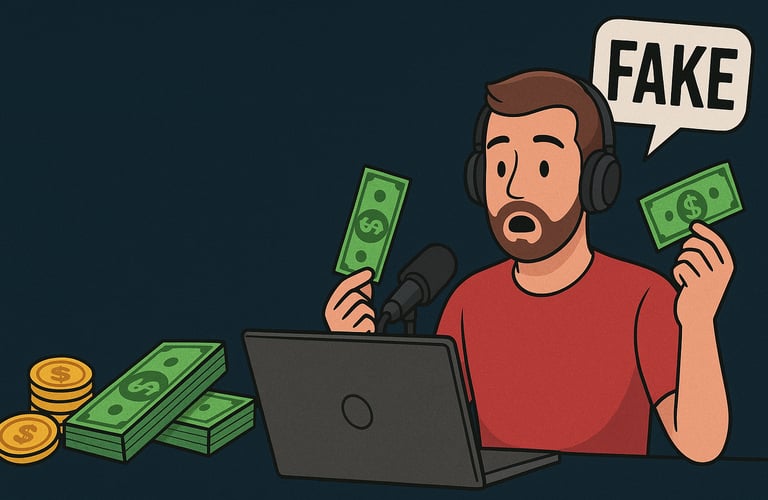
Is that jaw-dropping streamer win real — or staged with demo money? This deep dive examines documented cases, platform incentives, industry rules and how viewers can spot fake-balance gambling streams.
AWARENESS
10/25/20256 min read
Introduction: The Rise of Streamer Casinos
In 2026, the online gambling scene is more popular than ever — especially crypto casinos like Stake, where influencers stream high-stakes spins and bets in front of massive audiences. These creators appear to risk millions of dollars on slot machines, roulette, or sports bets, turning the thrill of gambling into live entertainment.
What Does “Fake Money” Mean on Stake?
Before jumping to conclusions, let’s clarify what “fake money” means. GamblingHood identifies three main categories used in influencer gambling setups:
1. Demo Mode (Purely Virtual Credits)
Stake and other casinos allow users to test games with virtual credits. These demo balances are not withdrawable and are meant purely for practice. However, when a streamer broadcasts such sessions without labeling them clearly, viewers can easily believe they are witnessing real betting.
2. Sponsored Balances (House Money)
In this model, casinos fund a creator’s account with huge amounts to play for the audience. The influencer may be allowed to keep a share of winnings, while the operator covers any losses. To the public eye, it looks like personal high-stakes gambling, but in truth, the risk is zero for the streamer.
3. Cashback or Loss-Refund Agreements
Some influencers get their losses reimbursed through private contracts or affiliate deals. This means even if they “lose” on stream, the money is quietly credited back later — a classic fake-risk setup.
Why Influencers Use Fake Balances: The Incentive Chain
GamblingHood’s 2026 data analysis explains that fake balances exist because the incentive system rewards illusion.
More Wins = More Views: Spectacular wins boost views, and more views attract new casino sign-ups.
More Sign-Ups = More Commission: Influencers earn affiliate revenue each time a viewer registers and deposits using their referral code.
More Exposure = More Sponsorship Deals: Casinos love creators who make gambling look glamorous and easy, so they bankroll them to keep the show running.
The end result? Viewers get mesmerized by streaks of “luck,” unaware that the streamer may not have any personal financial risk at all.
The Psychology of Deception
GamblingHood’s behavioral researchers found that fake money streams exploit basic human psychology. Viewers watching big wins feel excitement and envy simultaneously — emotions that push them to try gambling themselves.
Here’s how it works:
Spectacle of Success: Seeing someone win $500,000 in seconds triggers dopamine.
False Accessibility: Because the streamer “started small” or claims to, viewers think they can replicate it.
Authority Bias: Influencers appear knowledgeable, so their wins feel legitimate.
Community Pressure: Chat messages like “You’re next bro!” make losing viewers believe they just need to “try again.”
This creates a psychological funnel — from curiosity to excitement to addiction — all built on manipulated imagery.
Signs You’re Watching a Fake-Money Stream
GamblingHood lists several warning signs that can help viewers recognize when an influencer might not be using real funds:
No Deposits or Withdrawals Shown
If the streamer never shows their actual deposit process or cashing out — be cautious. Transparency is the hallmark of real play.Unlimited Rebuys or Instant Refills
Fake accounts often refill balance instantly after a loss, without visible transaction delays.Suspiciously Frequent Wins
Streamers winning massive jackpots every other day? Statistically improbable without manipulation.No Emotional Reaction to Losses
Losing $100,000 but laughing it off? That’s often a sign the money isn’t real.Affiliate Codes Everywhere
If every message, link, or pinned comment drives you to “Sign up with my link for a bonus,” that stream likely exists for marketing — not genuine gambling.
How Stake and Similar Platforms Benefit
GamblingHood’s 2026 investigation uncovered that the biggest beneficiary of fake-balance streams is the casino itself. Even if only a fraction of viewers register, the platform earns exponentially more from real player losses than it pays out in sponsorships.
It’s a textbook case of viral marketing:
One streamer’s fake million-dollar win gets millions of views.
Thousands of viewers deposit small amounts chasing the same thrill.
The casino profits from the math of probability — not luck.
Casinos claim that sponsorship deals are legal marketing arrangements, but when viewers aren’t told that the streamer plays with fake or protected funds, it crosses into deceptive advertising.
The Legal Gray Area in 2026
Gambling laws vary by jurisdiction, and crypto casinos often operate offshore. This creates a gray zone that allows influencer gambling to thrive.
Disclosure Rules: Some countries now require creators to clearly disclose if their funds are sponsored.
Advertising Restrictions: In the EU and parts of Asia, influencer gambling promotions must include disclaimers about risk.
Crypto Loopholes: Since Stake and similar sites use cryptocurrency, traditional regulators struggle to enforce transparency.
According to GamblingHood’s research, 2026 has seen a rise in proposed legislation demanding that gambling content be labeled by risk authenticity — meaning creators must reveal if they’re risking their own money or not.
When Viewers Lose and Influencers Win
The harsh truth: while influencers keep their sponsorships and fame, their followers often face financial disaster.
GamblingHood’s community survey in mid-2026 found:
63% of viewers who deposited on a casino after watching a streamer lost over 80% of their funds within the first month.
42% believed the streamer was gambling with real money when they weren’t.
11% reported using credit cards or loans to “chase” streamer-style wins.
This data confirms the emotional manipulation at the core of the fake-balance problem.
Inside the Influencer-Casino Relationship
GamblingHood insiders describe these deals as “entertainment contracts,” where the influencer agrees to play a set number of hours per week. The casino:
Funds the account directly.
Covers any losses.
Pays a base salary or a profit share.
Requires constant display of referral links.
Some contracts even include “scripted reactions” for specific win amounts to maximize virality. The illusion of “real stakes” keeps viewers emotionally invested.
Ethical Concerns and Viewer Manipulation
This trend raises serious ethical questions:
Is it fair to advertise gambling through fake performance?
Should viewers be informed when creators don’t actually risk their own money?
Does glamorizing gambling with fake success stories contribute to addiction?
GamblingHood’s ethics team concludes that undisclosed sponsored play qualifies as deceptive entertainment because it masks the fundamental truth — the influencer isn’t gambling; they’re performing.
Why the Problem Persists
Despite growing awareness, fake-money gambling continues for three main reasons:
Weak Regulation — Many streaming platforms don’t demand proof of financial authenticity.
Lucrative Profits — Casinos earn far more than they spend on sponsorships.
Viewer Denial — Many fans don’t want to believe their favorite streamer is acting; they’d rather believe in luck.
This toxic mix ensures the cycle keeps spinning — literally and metaphorically.
How GamblingHood Tracks Suspicious Streams
GamblingHood’s 2026 monitoring team uses AI tools to analyze:
Repetition patterns in slot results.
Blockchain deposits and withdrawals linked to streamer wallets.
Changes in account IDs and session seeds.
By comparing public on-chain data to what streamers show on screen, the platform can often identify when a “real money” claim doesn’t line up with blockchain activity — one of the strongest proofs of fake play.
The Industry’s Future: Will 2026 Bring Transparency?
There are early signs of progress. Some casinos have begun labeling influencer accounts as “Sponsored Play.” A few major streamers now display both their balance source and wallet address publicly — a move GamblingHood calls “proof of risk.”
Still, without unified regulation, most fake-money arrangements continue unchecked. GamblingHood predicts that by late 2026, governments will push for mandatory stream disclosure systems similar to financial influencer guidelines on YouTube.
How to Protect Yourself as a Viewer
GamblingHood advises all viewers and potential bettors to follow this checklist before trusting any gambling influencer:
Assume every streamer is sponsored until proven otherwise.
Check for disclaimers. Real creators clearly say when funds are sponsored.
Never gamble to imitate a streamer’s streak.
Use demo modes yourself instead of depositing right away.
Follow verified GamblingHood reports before engaging with any new casino promotion.
Remember: the house always wins — especially when you’re watching someone else’s “game.”
Real vs. Fake: The Emotional Impact
Even if money isn’t real, emotions are. Viewers feel genuine excitement watching fake-balance wins, but that emotional charge can lead to real losses later. GamblingHood psychologists call this “transferred thrill addiction” — the human brain’s inability to separate vicarious success from actual capability.
That’s why fake streams are more than just marketing tricks; they’re psychological traps.
What GamblingHood Stands For
Founded to promote transparency, awareness, and fairness in digital betting, GamblingHood in 2026 has launched initiatives that:
Expose fake gambling accounts.
Educate viewers about affiliate manipulation.
Push regulators for labeling laws.
Provide verified lists of legitimate, transparent casino partners.
Their ongoing campaigns emphasize one message: If the risk isn’t real, neither is the reward.
Conclusion: The Illusion of Risk
By now, one thing is clear — the influencer gambling world is built as much on perception as on probability. While the spin, the cards, and the dice might look random, the setup behind the screen is often scripted for marketing.
So next time you see an influencer hit a million-dollar jackpot on Stake, pause before getting inspired. Ask:
Did they actually deposit that money?
Are losses shown as openly as wins?
Is the casino sponsoring this act?
In the end, GamblingHood’s 2026 investigation reminds us: the only real gamble is believing everything you see online.
Stay skeptical. Stay smart. And never let someone else’s “fake balance” decide your financial reality.
© 2026 All rights reserved.
Follow us
Quick Links