The Hidden Cost of Gambling in 2026: Money, Mental Health, and Family | Gamblinghood
Gambling starts as entertainment but often ends in financial ruin, broken relationships, and mental health damage. This 2026 Gamblinghood reality check explains why you must quit gambling early, how addiction silently destroys lives, and the practical steps to regain control before it is too late.
AWARENESS
12/31/20254 min read
Introduction
In 2026, gambling is more accessible, faster, and more aggressive than ever before. What once required a physical visit to a casino can now be done in seconds from a mobile phone. Advertisements promise quick money, influencers normalize betting, and apps disguise gambling as “games” or “skill-based platforms.”
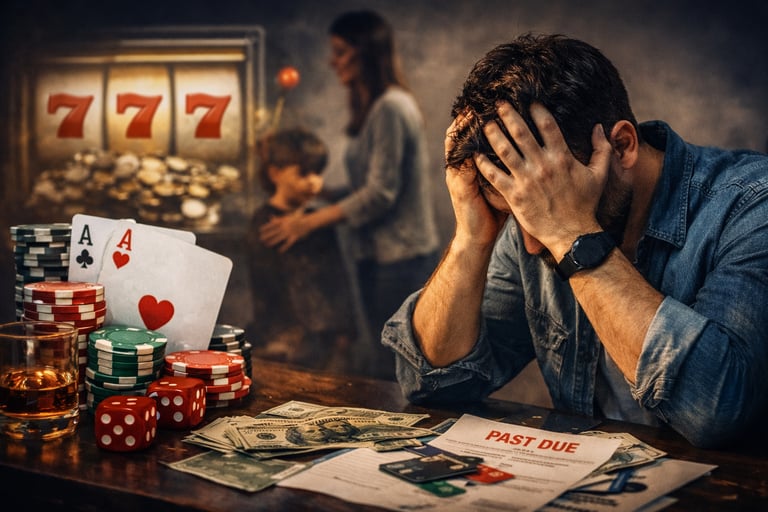
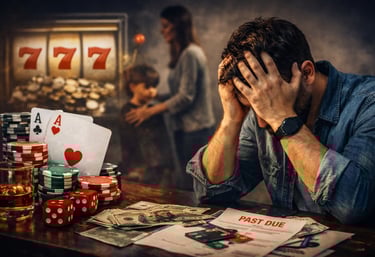
At Gamblinghood, we focus on one uncomfortable truth: gambling rarely destroys lives overnight. It does so quietly, step by step, until people realize they have lost far more than money. This article breaks down the real hidden costs of gambling in 2026—financial, psychological, and familial—and explains why quitting early is not weakness, but survival.
The Financial Cost: How Gambling Drains Money Without You Realizing
Most gamblers believe the damage is limited to “what they can afford to lose.” In reality, gambling losses extend far beyond visible bets.
Small Bets, Big Damage
Modern gambling platforms encourage:
Low minimum bets
High frequency gameplay
Instant deposits and withdrawals
A person may lose small amounts daily, but over months or years, these losses compound into:
Destroyed savings
Missed investments
Increased debt
What makes this worse in 2026 is automation. Auto-bets, one-click recharges, and instant credit features remove the psychological barrier of spending real money.
The Debt Trap
Many gamblers eventually turn to:
Credit cards
Personal loans
Borrowing from friends or family
This is where gambling stops being entertainment and becomes a financial emergency. Losses are chased, not accepted. The idea of “recovering money” keeps people trapped far longer than logic would allow.
Opportunity Cost
The biggest financial loss is not the money lost, but what that money could have become:
Long-term investments
Emergency funds
Education or business capital
Gambling converts potential future stability into guaranteed present loss.
The Mental Health Cost: Anxiety, Stress, and Loss of Control
Financial loss is measurable. Mental damage is not—and that is why it is often ignored.
Constant Stress and Obsession
Gamblers experience:
Anxiety when not betting
Obsessive thoughts about wins and losses
Mood swings tied to outcomes
In 2026, gambling platforms use real-time notifications, streaks, and rewards to keep users emotionally engaged. This creates a loop where the brain associates relief, excitement, and hope exclusively with gambling.
Guilt and Shame
Most gamblers hide their behavior. This secrecy leads to:
Chronic guilt
Social withdrawal
Loss of self-respect
The gambler knows the behavior is harmful but feels unable to stop. This internal conflict is one of the strongest contributors to depression among problem gamblers.
Loss of Decision-Making Ability
Over time, gambling damages judgment. People begin to:
Take higher risks than they normally would
Ignore responsibilities
Rationalize clearly harmful behavior
This loss of control is not a moral failure. It is the result of repeated dopamine manipulation by gambling systems designed to maximize engagement, not user well-being.
The Family Cost: Trust, Relationships, and Emotional Damage
Families rarely suffer immediately. The damage unfolds slowly.
Breakdown of Trust
Once gambling affects finances, trust erodes. Common issues include:
Lying about money
Hidden debts
Missed responsibilities
Trust, once broken, is difficult to rebuild. Even after quitting, families often struggle with lingering doubt and fear.
Emotional Absence
Gamblers may be physically present but emotionally unavailable. Gambling consumes attention, patience, and emotional energy. Family members often feel:
Ignored
Unsupported
Secondary to gambling
Children are especially affected, even if they do not fully understand what is happening.
Conflict and Isolation
Arguments over money and behavior become frequent. Over time:
Communication breaks down
Emotional distance increases
Families stop discussing real issues
In many cases, gambling does not just harm relationships—it ends them.
Why Gambling Is More Dangerous in 2026 Than Ever Before
The gambling environment of 2026 is fundamentally different from the past.
Always-On Access
There is no closing time. Gambling platforms are available:
24/7
Anywhere
On any device
This constant availability removes natural stopping points that once limited harm.
Gamification and Psychological Design
Modern gambling platforms use:
Bright visuals
Rewards systems
Artificial near-wins
These are not accidental features. They are designed to maximize time spent gambling, even when users are losing consistently.
Normalization Through Media
In 2026, gambling is often portrayed as:
A side hustle
A sign of intelligence
A social activity
This normalization makes it harder for people to recognize addiction early and easier to dismiss warning signs.
The Illusion of Control and Skill
Many gamblers believe they are different. They believe:
They have a system
They can quit anytime
They will stop after one big win
This belief is one of gambling’s most dangerous traps. Even games labeled as “skill-based” contain randomness, house edges, or platform advantages that ensure long-term losses for most participants.
Short-term wins reinforce false confidence. Long-term outcomes reveal reality.
Quitting Gambling: Why Early Exit Matters
The earlier a person quits, the less damage gambling can cause.
Quitting Is Not Failure
Stopping gambling is often framed as giving up. In truth:
Continuing is the risk
Quitting is control
Walking away is strength
No successful gambler quits because they are weak. They quit because they understand probability, psychology, and long-term consequences.
Rebuilding Takes Time—but It Is Possible
After quitting, people often experience:
Improved sleep
Reduced anxiety
Better relationships
Financial recovery may be slow, but mental clarity returns faster than most expect.
Replace, Don’t Just Remove
Successful quitting involves replacing gambling with:
Structured hobbies
Fitness or creative activities
Financial planning and education
The goal is not just abstinence, but rebuilding purpose and discipline.
A Message From Gamblinghood
At Gamblinghood, we are not anti-entertainment. We are anti-deception. Gambling does not take everything at once—it takes it quietly, piece by piece.
By the time many people realize the cost, they have already lost:
Financial stability
Mental peace
Family trust
2026 is the right time to see gambling clearly, without illusions or marketing noise. If gambling is already affecting your money, mood, or relationships, that is not coincidence. That is a warning.
Leaving gambling early is not fear-driven. It is intelligence-driven.
Final Thoughts
Money can be earned again. Time, trust, and mental health are far harder to restore.
If gambling is consuming more than it gives, the cost is already too high. The smartest move is not the next bet—it is the decision to stop.
Choose control. Choose clarity. Choose life beyond gambling.
© 2026 All rights reserved.
Follow us
Quick Links