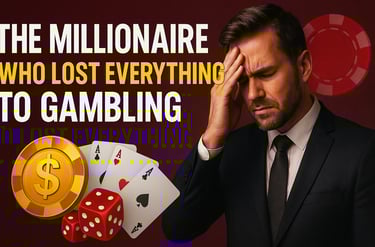
The Millionaire Who Lost Everything to Gambling in 2026 – A Cautionary Tale | Gamblinghood Exclusive
A 2026 Gamblinghood exclusive uncovering how a self-made millionaire fell into the trap of online gambling and lost it all. This emotional and factual breakdown reveals the psychological tricks, addictive systems, and manipulative tactics that destroy even the wealthiest minds.
AWARENESS
11/4/20255 min read
Introduction: From Millionaire to Broken Dream
In 2026, gambling addiction is not confined to the poor or desperate. It’s a silent predator that has claimed the fortunes of entrepreneurs, investors, and even digital millionaires.
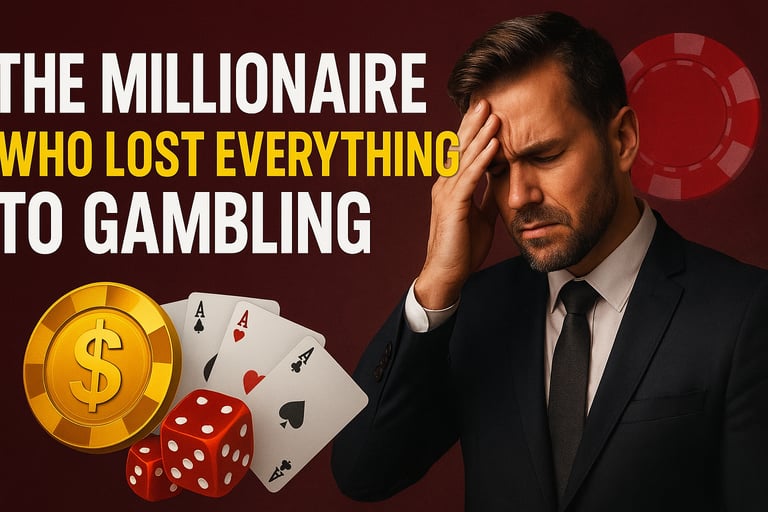
This is the story of a self-made millionaire who lost everything to online gambling, and a deep exploration into how wealth can transform from a blessing into a curse when combined with addiction.
Gamblinghood’s analysis of 2026 gambling trends reveals a startling truth: Over 12% of high-income gamblers faced bankruptcy or severe losses within the past year. Despite having resources, intelligence, and success, even millionaires are not immune to the psychological manipulation built into modern gambling platforms.
1. The Beginning: Success Breeds Overconfidence
Our story begins with Raj Mehta (name changed), a 34-year-old tech entrepreneur from Singapore who built his wealth through crypto investments and AI startups. By early 2026, Raj was worth nearly $14 million.
Like many young millionaires, Raj enjoyed risk-taking. His journey to success was filled with bold moves — and gambling felt like an extension of that thrill.
He initially joined an online poker site “for fun,” wagering small amounts just to relax after long work hours. But soon, fun became obsession.
In his own words:
“I felt like I was still investing — only this time, I was investing in luck.”
2. The Seduction of Online Gambling Platforms
Online casinos in 2026 aren’t just websites; they’re AI-driven ecosystems designed to manipulate human behavior. With personalized notifications, psychological triggers, and gamified rewards, they know exactly how to keep players hooked.
Raj received constant emails:
“You’re one spin away from the jackpot!”
“Your VIP bonus expires in 30 minutes!”
Every time he logged in, the interface greeted him with confetti, sounds, and digital celebrations — creating a sense of accomplishment even when losing money.
According to Gamblinghood’s digital behavior report, such positive reinforcement loops are engineered to mimic the dopamine spikes of victory — tricking users into chasing losses.
3. The Downward Spiral Begins
Within six months, Raj’s gambling behavior had escalated. What began as $500 bets turned into $10,000 stakes on roulette, blackjack, and crypto slots.
The trigger? Greed disguised as confidence.
After winning $200,000 in a single week, Raj felt invincible. But soon, he lost triple that amount trying to replicate his earlier success.
He wasn’t playing for money anymore — he was playing for redemption.
Gamblinghood’s addiction research identifies this phase as “Loss Chasing Syndrome”, a psychological loop where players keep betting to recover previous losses, unaware they’re sinking deeper.
4. The Psychological Trap: Wealth vs. Control
Unlike average gamblers, millionaires have one deadly advantage — access to endless funds.
This creates a dangerous illusion of control: the belief that they can always “buy their way out” of a losing streak.
Raj began liquidating stocks, selling NFTs, and using crypto assets to refill his gambling accounts. The more he played, the more he convinced himself that the next game would change everything.
He later admitted:
“I wasn’t gambling to win anymore — I was gambling to feel alive.”
The thrill had replaced logic, and dopamine had replaced discipline.
5. The AI Factor: How Platforms Exploit Wealthy Players
By 2026, most major gambling sites use AI behavioral models that identify high-value players. These systems analyze:
Bet sizes
Emotional responses (via reaction time and session duration)
Loss tolerance
Time spent on site
When a millionaire like Raj logs in, the AI immediately adjusts offers — exclusive bonuses, VIP rooms, and “special treatment.”
These personalized traps make it nearly impossible for players to quit. The more they spend, the more they are made to feel important — until their finances collapse.
6. The Breaking Point: When Reality Hits
By mid-2026, Raj’s losses had crossed $10 million. His business partners noticed inconsistencies in funds, and his accounts were nearly drained.
He mortgaged his penthouse and borrowed from friends under the pretense of a new startup.
Soon, everything was gone.
From luxury to loss — all within a year.
Raj’s story mirrors hundreds of others uncovered in Gamblinghood’s 2026 study titled “Wealth and the Gambling Paradox.” The report found that high-net-worth individuals lose 3x faster due to their tendency to take larger risks and rely on intuition rather than restraint.
7. The Emotional Aftermath
When Raj finally hit rock bottom, the emotional toll was immense. Depression, isolation, and guilt took over. He described it as:
“Losing the money wasn’t the worst part — it was losing myself.”
Gambling addiction often coexists with anxiety and substance abuse. In Raj’s case, insomnia and paranoia followed, as he constantly replayed his losses in his mind.
Psychologists point out that wealthy gamblers often feel a stronger sense of shame, since society views their downfall as “avoidable.” This prevents them from seeking help until it’s too late.
8. The Role of Online Gambling Companies
Online gambling platforms profit directly from addiction. Their algorithms track when players are most likely to deposit again after a loss and bombard them with offers.
They also collaborate with third-party marketers who sell behavioral data profiles of users — effectively turning addiction into a profitable metric.
Gamblinghood’s investigative report found that some gambling operators even reward “retention managers” for keeping high spenders active longer, regardless of the consequences.
9. The Family Impact: Collateral Damage
Raj’s addiction didn’t just ruin his finances — it tore apart his relationships.
His fiancée left, friends distanced themselves, and his parents stopped communicating after discovering the debts he owed.
This is the hidden cost of gambling — it destroys not just wealth, but trust and emotional stability.
Families of addicted gamblers often suffer from secondary trauma — anxiety, debt, and emotional burnout from trying to rescue the addicted person repeatedly.
10. The Illusion of Recovery: The Last Gamble
Like many gamblers, Raj believed one big win could fix everything. He turned to crypto casinos, thinking blockchain betting would be more “fair.”
Instead, he fell for scam platforms that vanished overnight.
By the end of 2026, Raj filed for bankruptcy, selling his remaining assets just to pay off debts.
His journey symbolizes the illusion of control that gambling feeds — a loop that traps players until they hit absolute zero.
11. The Lesson: Addiction Doesn’t Discriminate
Raj’s story proves that gambling addiction is not about intelligence or education. It’s a psychological disease that exploits emotion, not logic.
Even billionaires can fall victim — because gambling isn’t about money. It’s about chasing a feeling.
Gamblinghood’s data from 2026 shows that youth entrepreneurs and crypto millionaires are now the fastest-growing gambling demographic — drawn by risk, status, and false confidence in their luck.
12. How to Recognize the Warning Signs
If you or someone you know is displaying these signs, it might be time to seek help:
Increasing bets after losses
Borrowing to gamble
Obsessing over “winning it back”
Ignoring work or family due to gambling
Hiding gambling activity or financial details
Recognizing addiction early is the first step toward recovery.
13. The Road to Recovery
Raj eventually entered therapy through a Gamblinghood-funded recovery program. He now advocates for responsible gaming and speaks about the dangers of psychological manipulation in online gambling.
Recovery is possible, but it requires:
Professional help (therapy, rehab, or counseling)
Financial restructuring and accountability
Rebuilding purpose outside gambling
Raj now helps other addicts rebuild their lives, proving that it’s never too late to start again.
Conclusion: The Price of Playing with Fortune
The story of the millionaire who lost everything isn’t just about bad luck — it’s about human vulnerability in the face of calculated manipulation.
In 2026, gambling has evolved into a science of addiction, driven by data and profit. And while technology changes, one truth remains constant:
No one is immune to loss when greed meets illusion.
© 2026 All rights reserved.
Follow us
Quick Links