Top 5 Proven Tips to Quit Gambling Permanently in 2026 | Gamblinghood Recovery Guide
Want to break free from gambling for good? Gamblinghood’s 2026 guide reveals five powerful strategies to help you quit permanently, rebuild self-control, and regain your financial and mental freedom.
CASINO TIPS
11/3/20254 min read
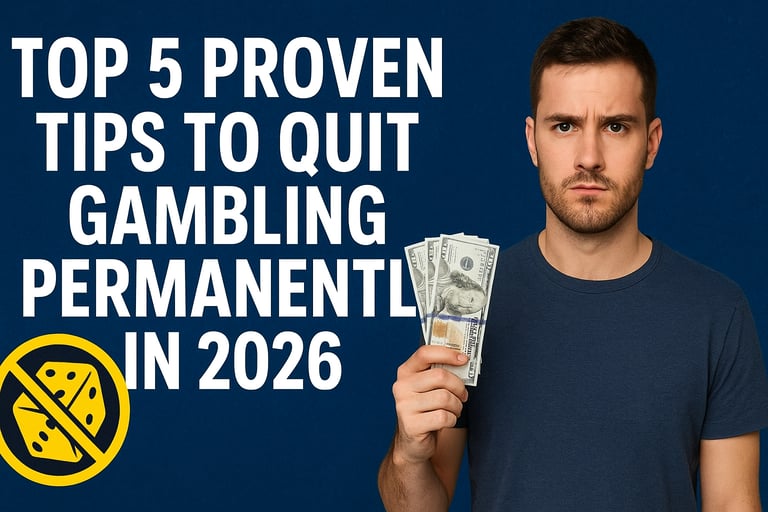
Top 5 Proven Tips to Quit Gambling Permanently in 2026
Gambling can start as harmless fun — a few bets here and there, a casual game with friends, or an occasional night at the casino. But for many, it turns into an uncontrollable cycle that damages finances, relationships, and emotional health.
The year 2026 brings advanced tools and support systems to help gamblers recover permanently. Gamblinghood’s expert recovery insights highlight five practical, science-backed strategies that can help anyone quit gambling for good and reclaim a balanced life.
1. Acknowledge the Problem — The First and Hardest Step
You can’t fix what you don’t face. The most powerful step in overcoming gambling addiction is admitting you have lost control. Denial keeps most addicts trapped in the loop — they believe they can “win it all back” or “just play one more time.”
To acknowledge your addiction:
Track how often you gamble each week.
Write down how much money you’ve lost in the past year.
Ask yourself if gambling has affected your relationships, work, or health.
Gamblinghood’s 2026 Behavioral Insight Survey found that 85% of recovering gamblers said acceptance was the moment their healing truly began. Once you face the truth, you can start rebuilding your life.
2. Block All Gambling Access (Digital Detox Method)
Modern gambling is digital — sports betting apps, online casinos, and crypto-based wagering are available 24/7. If you’re serious about quitting, the most effective move is to remove access completely.
Here’s how to do it:
Use blocking software like Gamban, BetBlocker, or Freedom to block all gambling websites and apps.
Notify banks and e-wallets to restrict transactions related to gambling.
Switch to cash budgeting — avoid linking debit/credit cards to betting platforms.
In 2026, many countries and financial institutions have “self-exclusion programs” — you can register yourself and be automatically barred from all licensed gambling sites.
Gamblinghood’s tech partnership with DigitalSafe BetGuard even offers AI-based alerts that flag risky spending patterns and notify you before you make impulsive bets.
3. Replace Gambling with Positive, Rewarding Habits
Addiction thrives when there’s a void — emotional, social, or financial. Quitting gambling successfully means replacing that void with positive alternatives that give you a sense of progress and satisfaction.
Effective replacement habits include:
Fitness and sports: Physical activity releases endorphins, easing stress and reducing gambling urges.
Investing in skills: Learn trading, coding, or creative work — things that build your income, not destroy it.
Volunteer work: Helping others provides emotional fulfillment and social connection.
Mindfulness practices: Meditation and yoga train your brain to resist impulsive urges.
According to Gamblinghood’s 2026 Recovery Blueprint, addicts who developed 2–3 replacement hobbies were three times more likely to stay gambling-free for over a year.
4. Seek Support — Don’t Fight Alone
Quitting gambling is not about willpower alone. Addiction is psychological, and isolation can make it worse. Real recovery happens when you seek support and accountability.
Ways to get help:
Join support groups like Gamblers Anonymous (GA) — both offline and online versions are available globally in 2026.
Use digital therapy apps like BetterHelp, Talkspace, or MindClinic for gambling counseling.
Join Gamblinghood Recovery Circles, an online peer group dedicated to helping gamblers track progress and share stories.
Psychologists note that gamblers who receive regular emotional support show a 72% higher long-term success rate in quitting permanently.
Never be ashamed to ask for help — it’s not weakness, it’s strength.
5. Rebuild Financial and Emotional Stability
Once you’ve stopped gambling, rebuilding your life becomes the next mission. Many ex-gamblers fall back into betting because of financial pressure or emotional emptiness. The key is to create new systems that protect your money and your mind.
Steps to rebuild financially:
Close or freeze accounts tied to betting platforms.
Create a monthly savings plan for emergency funds.
Track every expense using budgeting apps like YNAB or Wallet.
Start with small financial wins — even saving ₹500–₹1,000 weekly builds momentum.
Steps to rebuild emotionally:
Surround yourself with positive, non-gambling friends.
Forgive yourself for past mistakes.
Practice gratitude daily — it rewires your mindset toward growth, not regret.
Gamblinghood’s “Financial Recovery Tracker” helps users rebuild credit and monitor savings growth — proving that life after gambling is not just possible, but fulfilling.
The Psychology of Quitting — Why 2026 Is the Best Year to Stop
Unlike in the past, today’s recovery process benefits from technology and neuroscience. AI-driven mental health monitoring, online therapy access, and data-based recovery apps make quitting achievable for anyone willing to try.
Neuroscientific studies in 2026 show that the human brain can rewire addiction pathways through consistent habit replacement and mindfulness. Within 90 days of abstinence, dopamine regulation improves, reducing cravings significantly.
That means if you start today, you can completely transform your mind and behavior within just a few months.
Common Relapse Triggers and How to Avoid Them
Even the most determined ex-gamblers face temptation. Recognize these triggers early:
Boredom or loneliness: Keep your schedule full of positive tasks.
Financial stress: Avoid “quick fix” thoughts — seek proper debt management instead.
Peer pressure: Politely decline gambling events; replace them with social hobbies.
Overconfidence: Thinking “one small bet won’t hurt” is how addiction restarts.
Always remember: relapse isn’t failure — it’s a sign to reinforce your coping strategies. Gamblinghood’s relapse prevention module helps users track emotional patterns and reward progress with milestones.
Long-Term Recovery: Building a Life Beyond Gambling
Quitting gambling permanently isn’t just about stopping bets — it’s about redefining success and happiness. Replace the thrill of luck with the satisfaction of stability.
Here’s what a successful recovery path in 2026 looks like:
You wake up without anxiety about losses.
You have financial control and clear goals.
You spend more time with family and hobbies.
You find excitement in growth, not risk.
As you regain balance, you’ll discover that life without gambling is richer, calmer, and more rewarding than any jackpot.
Conclusion: Choose Recovery Over Risk
Breaking free from gambling is not a one-day fix — it’s a journey. But with the right mindset, technology, and community support, you can quit permanently.
Remember these five core principles:
Accept your problem honestly.
Remove all access to gambling.
Replace bad habits with healthy ones.
Seek emotional and social support.
Rebuild your financial and emotional health.
The tools exist. The science supports it. And Gamblinghood’s 2026 Recovery Program can guide you every step of the way.
Your new life starts the day you decide enough is enough.
© 2026 All rights reserved.
Follow us
Quick Links