Top 5 Things an Addicted Gambler Does Without Realizing It in 2026
In 2026, gambling addiction looks different but the damage is the same. Discover the top 5 behaviors every addicted gambler shows, why they happen, and how to regain control before it is too late.Top 5 Things an Addicted Gambler Does
AWARENESS
1/18/20264 min read
Introduction Gambling Addiction in 2026 Is More Dangerous Than Ever
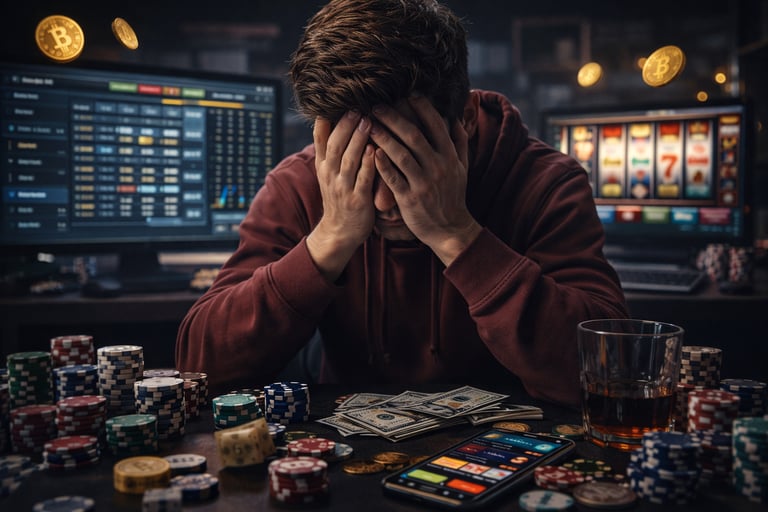
Gambling addiction in 2026 does not look like it did ten or even five years ago. It is no longer limited to physical casinos or late-night poker tables. Today, addiction lives in smartphones, betting apps, crypto casinos, live odds notifications, and 24-hour instant deposits.
Many people believe gambling addiction is obvious. They imagine someone who bets every day, loses all their money, and still cannot stop. In reality, addiction often hides behind rational excuses, temporary wins, and emotional justifications.
An addicted gambler rarely believes they are addicted. They believe they are “recovering losses,” “one good strategy away,” or simply “unlucky right now.”
This blog breaks down the top five behaviors that addicted gamblers almost always show in 2026, often without realizing the seriousness of their actions. These signs appear across sports betting, online casinos, crypto gambling, and even casual fantasy leagues.
Understanding these behaviors is the first step toward control.
Thing One Chasing Losses While Calling It Strategy
Loss chasing is the most common and most dangerous behavior of an addicted gambler in 2026.
After losing money, the addicted gambler does not stop. Instead, they feel an overwhelming urge to win back what was lost. The logic sounds convincing in their own mind. They believe stopping now would “lock in the loss,” while continuing gives them a chance to recover.
In 2026, technology makes this worse. Betting platforms push instant odds, quick reloads, and same-game parlays. The gap between losing and placing the next bet is measured in seconds, not hours.
The gambler convinces themselves:
One big win will fix everything
The next bet is smarter than the last
Increasing the stake improves recovery speed
In reality, chasing losses almost always leads to larger losses. It is driven by emotion, not logic. Studies consistently show that loss-chasing activates the same brain pathways as substance addiction.
The addicted gambler believes they are being strategic. In truth, they are reacting emotionally to pain.
Thing Two Gambling to Escape Stress Rather Than to Win
By 2026, gambling has become one of the most common emotional escape mechanisms. Many addicted gamblers are not chasing money anymore. They are chasing relief.
They gamble when they feel:
Stressed
Lonely
Angry
Bored
Depressed
Anxious
The act of placing a bet provides temporary relief. The anticipation distracts the mind from real-life problems. Win or lose, the gambler feels “alive” during the bet.
This is a critical warning sign because gambling shifts from entertainment to emotional regulation. At this stage, winning is no longer the main goal. The gambler is using betting as a coping mechanism.
In 2026, with live betting and instant results, this cycle is constant. Emotional discomfort appears, a bet is placed, relief is felt, then discomfort returns stronger.
This creates a loop:
Stress → Gamble → Temporary relief → Loss or win → More stress → Gamble again
Once gambling becomes emotional medicine, addiction deepens rapidly.
Thing Three Lying About Gambling Activity Without Feeling Guilty
One of the clearest signs of addiction is secrecy.
Addicted gamblers in 2026 often lie without consciously deciding to lie. They hide transaction histories, delete apps before family visits, underreport losses, or exaggerate wins.
They may say:
“I barely play now”
“I won most of it back”
“It’s just for fun”
“Everyone does this”
The lies are not always malicious. Often, they are protective. The gambler wants to avoid confrontation, shame, or the pressure to stop.
Over time, lying becomes normal. The gambler justifies it by thinking:
“They won’t understand”
“I’ll stop after this”
“There’s no point worrying them”
This behavior damages trust in relationships and increases isolation. The more isolated the gambler becomes, the stronger the addiction grows.
By the time lying feels routine, gambling has already taken control.
Thing Four Increasing Bet Size After Emotional Triggers
An addicted gambler’s betting behavior is rarely consistent. In 2026, emotional triggers heavily influence stake size.
After a bad day, a fight, or financial stress, the gambler suddenly increases their bet size. This is not confidence. It is emotional desperation.
Common triggers include:
Arguments with family
Work pressure
Social rejection
Boredom late at night
Seeing others win online
The gambler believes a larger bet will deliver a stronger emotional payoff. Bigger bets feel more meaningful, more intense, and more validating.
This escalation is dangerous because it disconnects gambling from bankroll management entirely. Logic disappears, replaced by emotional urgency.
In 2026, gambling platforms encourage this with:
High-roller bonuses
Flash promotions
VIP messages after losses
An addicted gambler responds impulsively, not rationally.
Thing Five Believing They Can Stop Anytime Without Proving It
Perhaps the most deceptive behavior is the belief that control still exists.
Most addicted gamblers genuinely believe they can stop anytime. They just do not choose to stop today. Tomorrow always feels like a better stopping point.
They may tell themselves:
“After I recover this loss, I’ll quit”
“Next month I’ll slow down”
“I’m not like real addicts”
The problem is that stopping is never tested. If someone truly has control, stopping for 30 or 60 days should be easy. For addicted gamblers, even a few days feels uncomfortable.
This belief delays recovery indefinitely. It creates a false sense of safety while damage accumulates quietly.
In 2026, with gambling accessible 24/7, self-control without structure rarely succeeds.
Why Gambling Addiction Feels Invisible in 2026
Modern gambling does not look dangerous on the surface. It is marketed as entertainment, skill-based, and social.
Apps are well designed. Losses are fragmented into small transactions. Digital money feels less real than cash. Crypto gambling adds another layer of psychological distance.
Because of this, many people slide into addiction without noticing. There is no single moment where gambling suddenly becomes a problem. It grows gradually.
By the time consequences are obvious, habits are deeply ingrained.
The Mental Cost Beyond Money
While money loss is visible, the mental cost is often worse.
Addicted gamblers experience:
Constant mental fatigue
Anxiety even when not gambling
Sleep disruption
Reduced concentration
Irritability
Low self-esteem
They replay losses in their mind, plan future bets obsessively, and struggle to enjoy non-gambling activities.
Over time, life shrinks around gambling.
Why Awareness Matters More Than Willpower
Most people assume quitting gambling requires willpower. In reality, awareness is far more powerful.
Understanding patterns breaks denial. Once behaviors are clearly identified, they are harder to ignore.
Organizations like GamblingHood focus on awareness because recognizing addiction early prevents long-term damage. Education allows people to intervene before financial or emotional collapse.
Addiction thrives in confusion. Clarity weakens it.
Steps That Help Regain Control in 2026
Regaining control does not require perfection. It requires honesty.
Effective steps include:
Tracking every bet and loss
Setting strict deposit limits
Taking voluntary self-exclusion breaks
Replacing gambling with alternative stress outlets
Talking openly about gambling behavior
The goal is not shame. The goal is control.
Final Thoughts
In 2026, gambling addiction is not about lack of intelligence or discipline. It is about how human psychology interacts with powerful digital systems designed to keep users engaged.
The five behaviors discussed here appear repeatedly across addicted gamblers worldwide. Recognizing them early can prevent years of damage.
If you see yourself in these patterns, it does not mean you are weak. It means you are human.
Awareness is the first step toward change.
© 2026 All rights reserved.
Follow us
Quick Links