
Why 1xBet, Stake, and Betway Are Banned in India 2026 – Gamblinghood Exclusive
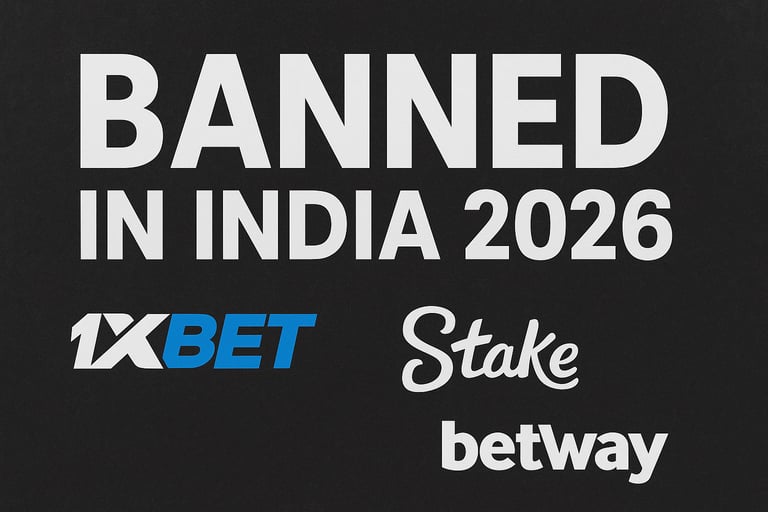
In 2026, India’s online gambling laws reached a critical turning point. Several global betting giants like 1xBet, Stake, and Betway found themselves banned from the Indian market due to tightening regulations, financial scrutiny, and user protection laws. In this Gamblinghood exclusive, we explore the full story behind these bans, the government’s perspective, and what it means for the future of online betting in India.
AWARENESS
10/24/20255 min read
Introduction – The End of an Era for Global Betting Giants
For years, platforms like 1xBet, Stake, and Betway dominated the Indian betting landscape. Offering cricket, football, casino games, and lucrative promotions, they became household names for online punters. But by 2026, the Indian government began enforcing strict digital gambling regulations, and these international betting giants were suddenly blocked, restricted, or completely banned.
The bans didn’t happen overnight. They were the result of a long, evolving conflict between India’s unregulated betting industry, digital payment restrictions, and growing concerns over money laundering, addiction, and tax evasion.
Let’s break down why these platforms were banned and what it means for Indian bettors moving forward.
1. India’s Complicated Legal Stand on Online Betting
India’s gambling laws have always been fragmented and outdated. The Public Gambling Act of 1867, which governs most of the nation’s betting rules, never anticipated digital betting platforms or cryptocurrencies.
While some states like Sikkim and Goa have legalized and regulated casino gaming, others maintain strict prohibitions. Online betting, in particular, exists in a legal gray area — not explicitly legal, yet widely accessible through foreign platforms.
In 2026, this ambiguity began to fade as the Indian government moved toward stricter enforcement. New digital policies began treating foreign betting sites as illegal online gaming operators, especially those using crypto or non-Indian payment methods.
2. The Rise and Dominance of 1xBet, Stake, and Betway
Before their ban, these three platforms were the undisputed leaders in India’s online betting ecosystem:
1xBet attracted millions of Indian users with its cricket odds, IPL betting, and massive sign-up bonuses.
Stake, known for its sleek design and crypto-based betting system, drew in tech-savvy gamblers.
Betway positioned itself as the “premium” bookmaker, often sponsoring cricket and football events.
They leveraged influencer marketing, Telegram groups, and affiliate programs to build massive user bases. By 2025, it was estimated that over 40 million Indian bettors used one or more of these platforms.
However, this popularity came at a cost — regulatory scrutiny, concerns over unlicensed operations, and growing reports of user fund losses and tax evasion.
3. Why the Indian Government Stepped In
By 2026, Indian authorities had grown alarmed at the explosion of unregulated online betting. Here are the main reasons they moved to ban these international operators:
a. Lack of Licensing and Regulation
These companies were registered overseas — in places like Curaçao, Cyprus, or Malta — meaning they operated outside Indian jurisdiction.
They had no legal license to operate within India, making them technically illegal.
b. Financial and Tax Evasion
Users could deposit money via cryptocurrencies, UPI alternatives, and offshore accounts, making it almost impossible to track or tax transactions.
This led to large-scale money laundering concerns, prompting the Financial Intelligence Unit (FIU) to investigate.
c. Protection of Indian Users
Thousands of complaints emerged on social media and forums about blocked withdrawals, account freezes, and delayed payouts.
Since the platforms were foreign-based, Indian users had no legal recourse for disputes.
d. Celebrity and Influencer Promotions
The use of Bollywood stars and YouTubers to promote these betting platforms raised ethical and legal questions.
In late 2025, the Advertising Standards Council of India (ASCI) tightened its guidelines, leading to heavy fines and suspensions for gambling ads.
4. RBI and IT Ministry Crackdown
In 2026, India’s Reserve Bank (RBI) and Ministry of Electronics and Information Technology (MeitY) took joint action against offshore betting platforms.
Payment Restrictions:
UPI, Paytm, and other Indian payment systems were barred from processing deposits or withdrawals to these platforms.Website Blocking:
The IT Ministry ordered Internet Service Providers (ISPs) to block domains associated with 1xBet, Stake, and Betway.Crypto-Linked Transactions:
Since Stake heavily relied on Bitcoin and Ethereum, crypto exchanges were warned against facilitating transactions with such gambling entities.
These combined actions effectively cut off access to most users — marking a major step toward cleaning up the digital betting space.
5. User Backlash and Market Confusion
When the bans were first implemented, Indian bettors were caught off guard. Suddenly, their favorite betting apps stopped working, and balances were stuck in inaccessible accounts.
Social media saw an explosion of posts like “1xBet not opening in India”, “Betway app blocked”, and “Stake withdrawal not working.”
Many users tried VPNs or mirror links to access the platforms — but that only worked temporarily. The government swiftly began blocking mirror sites, making bypassing the restrictions harder.
Meanwhile, fake clones and scam platforms began appearing, taking advantage of user confusion to steal deposits.
6. Gamblinghood’s Exclusive Insight – What Really Triggered the Ban
According to Gamblinghood’s 2026 investigation, the final push for the ban came after the Financial Intelligence Unit of India (FIU-IND) submitted a report showing that over ₹4,200 crore ($500 million) had flowed to unregulated foreign betting platforms in just 18 months.
This money trail included links to crypto mixers, offshore accounts, and affiliate payouts that bypassed tax systems entirely.
The FIU categorized 1xBet, Stake, and Betway as “high-risk foreign entities”, citing their:
Failure to verify user KYC under Indian standards.
Use of crypto for cross-border transactions.
Involvement in illegal digital marketing campaigns targeting minors.
The report made it clear: India needed to act fast or risk an uncontrollable wave of financial and legal challenges.
7. The Global Ripple Effect
Interestingly, India wasn’t alone. Around the same time, Singapore, Japan, and Australia also tightened gambling laws, citing similar reasons.
Betway and 1xBet both faced advertising restrictions in Europe, while Stake had to restructure its crypto compliance policies in North America.
For India, the bans were part of a broader international crackdown to ensure safer, licensed, and transparent online gambling.
8. Are Indian Alternatives Rising?
Yes — in the wake of these bans, a few India-based licensed platforms started emerging in 2026.
Some examples include:
FairPlay 2.0 (under revised Indian license)
Parimatch India (compliance-certified)
WinZo Sports (state-approved)
These companies now promote responsible gambling, clear KYC, and Indian payment gateways, ensuring compliance with local laws.
However, their odds and bonuses are generally smaller compared to 1xBet or Stake, which might slow user migration.
9. The Future of Betting in India – Regulate or Prohibit?
As of 2026, India faces a major crossroads:
Should it completely prohibit all betting activity or create a transparent regulatory system like the UK or Malta?
Experts from Gamblinghood argue that outright bans often fail because:
They drive users to black markets and VPNs.
They eliminate potential tax revenue.
They reduce transparency and user protection.
Instead, they suggest introducing a national licensing system with:
Strict age verification
Transparent odds and audit systems
Local payment oversight
Responsible gaming frameworks
This could allow India to benefit from the booming online betting economy while keeping users safe.
10. Conclusion – What Bettors Should Know in 2026
The bans on 1xBet, Stake, and Betway represent a significant shift in India’s digital gambling environment.
They highlight the government’s growing determination to control cross-border transactions and protect its citizens from fraud and addiction.
For users, this ban serves as a wake-up call:
Avoid offshore and unlicensed platforms.
Always check local legality before depositing money.
Use licensed Indian platforms that follow KYC and financial transparency rules.
Gamblinghood’s 2026 research concludes that the future of betting in India lies in regulation, not prohibition.
If India can modernize its outdated gambling laws, both users and the economy will benefit.
Gamblinghood 2026 Insight:
“Banning 1xBet, Stake, and Betway isn’t just about stopping betting — it’s about creating a safer, regulated, and transparent environment for the future of Indian online gambling.”
© 2026 All rights reserved.
Follow us
Quick Links