
Why Betting on the NBA Is Not a Smart Decision in 2026: A Reality Check | GamblingHood
NBA betting has become more accessible and aggressive than ever in 2026, driven by apps, influencers, and constant promotions. However, ease of access does not equal smart decision-making. In this in-depth analysis by GamblingHood, we explain why betting on NBA games is statistically unfavorable, psychologically damaging, and financially risky for most people—despite the illusion of skill and control.
AWARENESS
12/10/20254 min read
Introduction: NBA Betting in 2026 – Easier Than Ever, Smarter Than Ever?
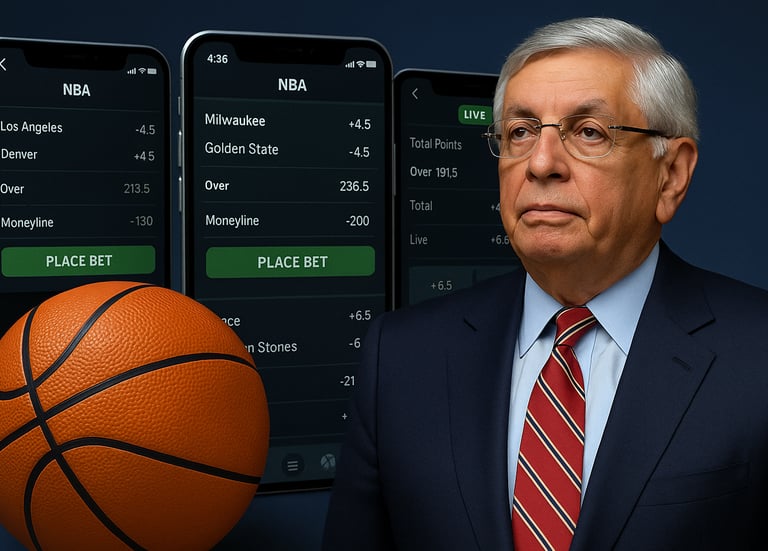
In 2026, betting on the NBA is no longer limited to casinos or underground bookies. With mobile apps, instant payouts, micro-betting, and aggressive advertising, placing a bet on an NBA game now takes less time than ordering food.
This convenience has created a dangerous perception:
“If it’s this easy, it must be manageable.”
That assumption is wrong.
Despite being marketed as skill-based, data-driven, and entertainment-focused, NBA betting remains, at its core, a negative-expectation activity for the bettor.
This GamblingHood analysis explains—without exaggeration or moral panic—why betting on the NBA is financially irrational for most people in 2026, and why the system is structured for bettors to lose over time.
The Illusion of Skill in NBA Betting
One of the biggest reasons people defend NBA betting is the belief that it is skill-based.
Why This Illusion Exists
Fans follow teams closely
Advanced statistics are widely available
Analysts break down games daily
Everyone believes they “know basketball”
Compared to roulette or slots, NBA betting feels intellectual.
The Reality
Even with deep basketball knowledge:
Odds already reflect public information
Injuries, rotations, and tactics are priced in
Sharp money moves lines before casual bettors act
By the time you place a bet, you are not competing against “chance”—you are competing against:
Professional oddsmakers
Mathematical models
Syndicates with superior speed and data
Knowledge alone does not overcome this disadvantage.
How Sportsbooks Are Structurally Designed to Win
NBA betting is not a fair contest.
The Built-In House Edge
Sportsbooks do not need to predict outcomes perfectly. They only need to:
Balance money on both sides
Charge commission (vig)
Adjust lines dynamically
Even if you win 50% of your bets, you still lose money over time due to the vig.
This means:
Correct prediction is not enough
You must consistently beat the market
Very few people do this long-term
Sportsbooks win because their profit model is mathematical, not emotional.
Why NBA Betting Is Harder Than Other Sports
Basketball’s fast pace gives an illusion of opportunity—but it creates more variance.
Key NBA-Specific Risks
High scoring increases volatility
Player rest and load management
Late injury scratches
Coaching rotation changes
Garbage time ruining spreads
A single coach decision in the fourth quarter can destroy an otherwise “perfect” bet.
NBA games are information-dense but outcome-fragile.
The Rise of Micro-Betting: A Major Trap
In 2026, micro-betting is heavily promoted.
Examples include:
Next basket scored
Player points in next 2 minutes
Live over/under shifts
Why Micro-Betting Is Dangerous
Rapid repetition increases impulsivity
No time for rational decision-making
Heightened dopamine response
Faster bankroll destruction
Micro-betting turns NBA games into a continuous betting loop rather than a single decision.
From a GamblingHood perspective, this format is optimized for losses, not entertainment.
Why “Winning Streaks” Are Misleading
Many bettors continue because they experience occasional success.
What Actually Happens
Random clusters of wins feel like skill
Losses are mentally minimized
Wins are emotionally amplified
This is classic selective memory bias.
Over hundreds of bets, even skilled bettors inevitably regress toward negative returns if they are paying vig.
Short-term success does not indicate long-term profitability.
Player Prop Betting: Even Worse Than Match Betting
NBA player props are massively popular in 2026.
They appear attractive because:
Fans feel they understand players
Stats feel predictable
Props look simpler than spreads
The Reality
Lines are highly efficient
Variance is extreme
Random factors dominate outcomes
Foul trouble, blowouts, and coaching decisions regularly ruin otherwise logical prop bets.
Player prop betting increases complexity without improving odds.
Emotional Betting and Fan Bias
NBA fans are emotionally attached to teams and players.
This emotional investment is a major disadvantage.
Common Biases Include
Overvaluing favorite teams
Betting against disliked players
Chasing losses after bad beats
Betting late games to recover losses
Sportsbooks benefit directly from fan loyalty and emotional triggers.
Rational money and emotional money do not coexist.
Why Betting Apps Make Things Worse in 2026
Modern betting platforms are designed for engagement, not wellbeing.
Key Design Tactics
Push notifications
“Risk-free” bonuses
Personalized odds
Celebration animations
Instant withdrawals followed by instant deposits
These features are based on behavioral psychology, not user protection.
The easier it becomes to bet, the harder it becomes to stop.
The Financial Reality: Long-Term Losses Are Almost Guaranteed
Let’s be clear.
For the average bettor:
Long-term profit is statistically unlikely
Losses accumulate slowly but surely
Time magnifies damage
Most bettors do not track:
Total losses
Opportunity cost
Emotional toll
What feels like “small entertainment spending” often becomes a significant financial drain.
Chasing Systems, Tips, and Influencers
In 2026, NBA betting content is everywhere.
Why This Is Misleading
Tipsters sell confidence, not accuracy
Records are selectively shown
Losses are hidden
Followers absorb losses, not profits
If consistent winning systems existed, they would not be sold publicly.
Professional bettors protect edges—they do not broadcast them.
Mental Health Impact of Sports Betting
The damage is not only financial.
Common consequences include:
Anxiety during games
Mood swings tied to outcomes
Sleep disruption
Obsessive match tracking
Reduced enjoyment of sport
NBA betting can gradually turn basketball from entertainment into stress.
GamblingHood strongly recognizes this psychological cost as one of the most under-discussed harms.
Time Cost: The Invisible Loss
NBA betting consumes time:
Research
Line monitoring
Live watching
Emotional recovery
This time could be spent:
Improving skills
Building income
Exercising
Developing hobbies
Even “break-even” bettors lose valuable time.
Why “Responsible Betting” Often Fails in Practice
While responsibility tools exist, they rely on self-control.
Problems include:
Limits reset emotionally
Losses justify exceptions
Wins justify overconfidence
Addiction is usually gradual, not immediate.
The system depends on players failing to self-regulate.
Better Alternatives to NBA Betting
If your interest is:
Strategy → Watch analysis, don’t wager
Entertainment → Treat games as sport
Money → Invest, not gamble
Competition → Fantasy leagues without cash
Enjoying basketball does not require financial risk.
Is There Anyone Who Should Bet on the NBA?
A very small minority:
Professional bettors
Quantitative syndicates
People with strict systems and discipline
For the average fan, NBA betting is not a viable income path.
It is a monetized hobby with negative expectation.
2026 Outlook: More Regulation, More Normalization
In 2026:
NBA betting will be further normalized
Advertising will increase
Integration with sports media will deepen
This does not mean betting becomes safer.
It means losses are spread across more people quietly.
Final Thoughts: Entertainment or Expense?
NBA betting is marketed as fun, smart, and controllable.
In reality:
The game favors bookmakers
Emotion overrides logic
Long-term profit is rare
Psychological costs are real
Choosing not to bet is not weakness—it is a rational financial decision.
Understanding this before losses accumulate is far better than realizing it afterward.
© 2026 All rights reserved.
Follow us
Quick Links