
Why Gambling Is Rising Rapidly Among Indian Youth in 2026: Causes, Psychology, Technology & Social Impact | GamblingHood
Gambling among Indian youth has grown sharply by 2026, driven by online platforms, digital payments, influencer culture, and changing risk attitudes. This GamblingHood analysis explores the real reasons behind the rise, including psychological factors, social media influence, economic pressure, mobile gaming, legal grey zones, and the long-term consequences for individuals and society.
AWARENESS
12/20/20254 min read
Introduction
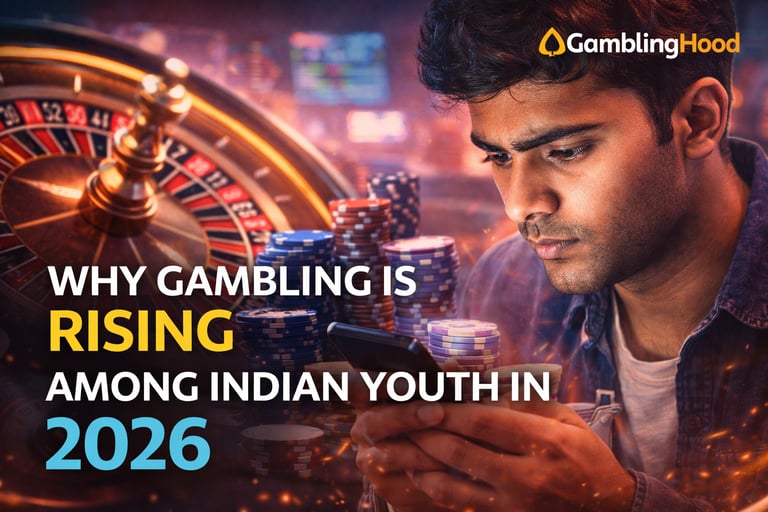
By 2026, gambling has emerged as one of the fastest-growing behavioral trends among young people in India. What was once restricted to informal betting, card games, or underground activities has now transformed into a digital, mobile-first ecosystem accessible to millions of young users with a smartphone and internet connection.
Fantasy sports, online casinos, betting apps, crypto-based gambling platforms, and skill-based money games are increasingly popular among individuals aged 18 to 30. This surge is not accidental. It is the result of technological, psychological, economic, and cultural forces converging at the same time.
This GamblingHood analysis explains why gambling is rising so rapidly among Indian youth in 2026, what factors are fueling this growth, and what it means for the future.
The Digital Transformation of Gambling
The most important reason for the rise of gambling among youth is digitization.
By 2026:
Smartphones are ubiquitous
High-speed internet is affordable
Digital wallets and UPI enable instant transactions
Apps provide 24/7 access
Gambling no longer requires physical presence, secrecy, or social barriers. It is now private, instant, and frictionless.
This ease of access has fundamentally changed participation patterns, especially among younger users who are already digitally native.
Mobile Gaming and the Blurred Line Between Gaming and Gambling
One of the most dangerous drivers is the blurring of boundaries between gaming and gambling.
Many platforms:
Use game-like visuals
Reward frequent play
Offer “skill-based” justification
Normalize micro-transactions
Young users often enter gambling ecosystems through casual games, fantasy leagues, or competitive apps, without initially perceiving them as gambling.
Over time, real money involvement becomes normalized, and risk-taking escalates.
Fantasy Sports and Skill-Based Betting Narrative
Fantasy sports platforms have played a major role in mainstreaming gambling-like behavior among Indian youth.
Key reasons:
Marketed as “skill-based”
Associated with sports knowledge
Legally permitted in many regions
Promoted heavily during major sporting events
While skill does play a role, monetary risk and probability still dominate outcomes for most users. The perception of control encourages repeated participation and higher spending.
Influencer Culture and Social Media Normalization
Social media has amplified gambling participation in unprecedented ways.
Influencers:
Share winnings publicly
Promote referral bonuses
Present gambling as “smart income”
Avoid discussing losses
This creates survivorship bias, where young viewers see only success stories and not the majority who lose money.
By 2026, gambling content is embedded into:
Instagram reels
YouTube shorts
Telegram channels
Gaming livestreams
This constant exposure reduces psychological resistance and normalizes gambling behavior.
Economic Pressure and Aspirational Stress
Economic realities also play a significant role.
Many young Indians face:
High competition for jobs
Income instability
Rising living costs
Delayed financial independence
Gambling platforms exploit this pressure by:
Promising quick money
Framing betting as “side income”
Highlighting rare success cases
For youth feeling stuck or financially anxious, gambling appears as a shortcut, even though it statistically worsens financial outcomes.
The Psychology of Risk and Reward in Youth
Young adults are neurologically more prone to risk-taking.
Key psychological traits:
Higher dopamine sensitivity
Lower impulse control
Strong reward anticipation
Overconfidence in decision-making
Gambling platforms are designed to:
Trigger dopamine through near-wins
Encourage repeated play
Offer variable rewards
Exploit loss-chasing behavior
This makes young users especially vulnerable to addictive cycles.
Loss Chasing and the Illusion of Control
One of the most common behavioral patterns among young gamblers is loss chasing.
After losing money, users believe:
The next bet will recover losses
Skill or strategy will eventually win
Persistence equals success
This illusion of control leads to:
Increasing bet sizes
Emotional decision-making
Escalating losses
By the time reality sets in, financial and psychological damage has often already occurred.
Legal Grey Areas and Regulatory Gaps
India’s gambling laws are fragmented and outdated.
Key issues:
State-wise legal differences
Ambiguity around online platforms
“Skill vs chance” loopholes
Offshore operators targeting Indian users
This regulatory confusion creates an environment where:
Platforms operate aggressively
Consumer protections are weak
Enforcement is inconsistent
Youth are often unaware of legal implications or lack of recourse in disputes.
Digital Payments and Frictionless Losses
The rise of instant digital payments has removed the psychological “pain of paying.”
When money is:
Just a tap away
Not physically visible
Instantly transferable
Users spend more freely and lose track of total losses. This detachment increases gambling frequency and reduces self-regulation.
Social Acceptance and Peer Influence
Peer behavior strongly influences youth gambling.
When:
Friends discuss winnings
Betting becomes group activity
Losses are hidden
Participation is normalized
Resistance drops significantly.
Many young users start gambling not out of desire, but out of social inclusion.
The Role of Advertising and Sponsorships
By 2026, gambling brands sponsor:
Sports teams
Online tournaments
Esports events
Streaming platforms
This association with entertainment and sports legitimizes gambling in the eyes of youth and reduces perceived risk.
Mental Health Impact
The rise in youth gambling correlates with:
Increased anxiety
Depression
Sleep disorders
Financial stress
Relationship conflicts
Losses are often hidden due to shame, leading to isolation and worsening mental health outcomes.
Why Youth Believe “They Will Be Different”
A recurring theme among young gamblers is exceptionalism.
Common beliefs:
“I understand the game better”
“Others are careless, I’m strategic”
“I’ll stop once I win”
This mindset delays intervention and increases long-term harm.
Long-Term Societal Consequences
If current trends continue, India may face:
Increased youth debt
Reduced savings culture
Mental health strain
Productivity loss
Normalization of financial risk-taking
Gambling does not just affect individuals — it reshapes economic behavior at scale.
Why Awareness Has Not Kept Pace
Despite growth, awareness remains low because:
Losses are private
Platforms highlight success
Education lacks financial risk literacy
Social stigma prevents discussion
This silence allows the trend to expand unchecked.
Can This Trend Be Reversed?
Reversal requires:
Clear regulation
Honest public education
Platform accountability
Mental health support
Financial literacy integration
Most importantly, it requires changing the narrative from glamour to realism.
What Young People Need to Understand
The most important truth is simple:
Gambling is not a solution to financial or emotional stress.
Statistically:
Most users lose
A small minority profit
Platforms always have an edge
Understanding this early can prevent years of damage.
Conclusion
The rise of gambling among Indian youth in 2026 is not accidental. It is the result of technology, psychology, economics, social influence, and regulatory gaps converging at once.
Gambling has been packaged as entertainment, opportunity, and intelligence — but its long-term impact tells a different story.
For GamblingHood readers, the key takeaway is clear:
Gambling grows fastest where hope is high, regulation is weak, and awareness is low.
Addressing this trend requires honesty, education, and responsibility — not silence.
© 2026 All rights reserved.
Follow us
Quick Links