Why People Can’t Stop Gambling in 2026 – It Has Nothing to Do With Greed
If gambling was about greed, people would quit after losing once Why People Can’t Stop Gambling . This article exposes the real emotional reason people keep gambling in 2026.
AWARENESS
2/1/20263 min read
Gambling Has Changed, But the Pain Hasn’t
In 2026, gambling doesn’t look like it used to.
It’s no longer smoky casinos and late-night betting shops alone. Gambling is now:
In your phone
In your browser
In your favorite sports app
In crypto trading interfaces
In “games” that don’t look like gambling
Yet despite awareness, education, and countless stories of losses, more people are gambling than ever.
The popular belief is simple:
“People gamble because they’re greedy.”
That belief is wrong — and dangerously incomplete.
At Gamblinghood, we analyze gambling behavior patterns, relapse cycles, and emotional triggers. One truth stands out in 2026:
Most people don’t gamble to get rich.
They gamble to escape.
The Core Truth: Gambling Is Emotional, Not Financial
If gambling were only about greed, people would stop after losing once.
They don’t.
People continue gambling even when:
They are in debt
They know odds are against them
They’ve already “lost everything”
They promise themselves it’s the last time
This tells us something critical:
Gambling is not a money problem.
It is an emotional regulation problem.
Money is just the medium.
The Biggest Reason People Gamble in 2026: Psychological Escape
The number one reason people gamble in 2026 is escape from reality.
Not luxury.
Not greed.
Not ambition.
Escape.
Escape From What?
Financial stress
Job rejection
Career stagnation
Loneliness
Social pressure
Failure shame
Comparison culture
Family expectations
Internal emptiness
Gambling offers something rare:
Temporary relief from thinking.
When a bet is placed, the mind goes silent.
Gambling Temporarily Silences Pain
During gambling:
The future doesn’t exist
The past doesn’t exist
Only the moment exists
This is why gambling feels addictive.
It creates:
Focus
Excitement
Hope
Control illusion
For someone overwhelmed by life, this state feels like peace.
That peace is fake — but powerful.
Why “One Last Bet” Never Ends
People don’t chase wins.
They chase relief.
When someone says:
“Just one last bet to recover”
What they actually mean is:
“I want this anxiety to stop.”
The brain learns:
Stress → gamble
Pain → gamble
Boredom → gamble
Sadness → gamble
This is conditioning, not greed.
Dopamine: The Hidden Engine Behind Gambling
In 2026, neuroscience explains gambling better than morality ever did.
Gambling spikes dopamine, not happiness.
Dopamine is:
Anticipation
Possibility
“What if”
The biggest dopamine hit doesn’t come from winning.
It comes just before the result.
That’s why:
Near misses hurt more than losses
Watching odds move feels thrilling
Cash-out screens are addictive
The brain isn’t addicted to money.
It’s addicted to possibility.
Why Losses Don’t Stop People
Loss should logically discourage gambling.
But emotionally, loss often intensifies it.
Why?
Because loss creates:
Shame
Self-hatred
Panic
Regret
Gambling promises:
Redemption
Reset
A way out
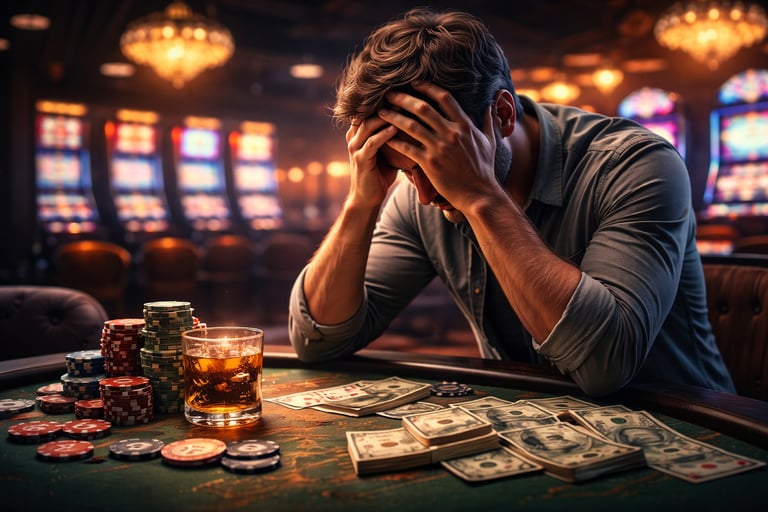
So people gamble again — not to win, but to undo pain.
This is why Gamblinghood emphasizes:
You cannot logic someone out of an emotional trap.
Modern Gambling Is Designed to Trap, Not Entertain
In 2026, gambling platforms are engineered with precision.
They use:
Variable rewards
Instant deposits
Frictionless withdrawals (until losses mount)
Personalized odds
Push notifications
Loss-recovery messaging
This is not accidental.
Modern gambling is behavioral engineering, not chance.
The system profits most when players:
Lose slowly
Keep playing
Believe skill will fix it
The Role of Social Comparison
Social media has changed gambling psychology deeply.
People now gamble because:
Others seem to be winning
Losses are invisible
Wins are broadcast
Lifestyle success looks effortless
This creates a false belief:
“Everyone is making money except me.”
Gambling becomes an attempt to catch up, not get rich.
Gambling as a Substitute for Purpose
Many gamblers in 2026 feel lost.
No clear career path.
No recognition.
No sense of progress.
Gambling offers:
A scoreboard
A win/lose metric
Immediate feedback
A sense of identity
For some, gambling becomes the only place they feel alive.
This is tragic — not greedy.
Why Smart People Gamble Too
Intelligence does not protect against gambling.
In fact, it can worsen addiction.
Smart gamblers:
Believe they can outthink odds
Over-analyze patterns
Trust logic over probability
Justify losses intellectually
They don’t feel reckless.
They feel strategic.
That illusion keeps them trapped longer.
The Shame Loop: Why People Hide Gambling
Most gamblers hide their behavior.
Not because they’re proud — but because they’re ashamed.
Shame causes:
Isolation
More gambling
Less accountability
Deeper losses
The worst part?
Shame convinces people they deserve punishment — and gambling becomes that punishment.
Why Quitting Gambling Feels Like Grief
When people quit gambling, they don’t just lose a habit.
They lose:
Hope of quick recovery
Emotional escape
Identity
Routine
Excitement
This feels like grief.
That’s why relapse is common.
Not because people are weak — but because nothing replaced what gambling provided.
The Biggest Lie People Tell Themselves
“I’ll stop once I recover my losses.”
This is the most dangerous belief in gambling.
Loss recovery thinking:
Keeps people trapped
Prevents acceptance
Delays healing
Multiplies damage
At Gamblinghood, we say:
You don’t recover losses with gambling.
You recover life by stopping.
What Actually Helps People Stop Gambling
Not fear.
Not lectures.
Not shame.
What helps:
Honest self-reflection
Emotional support
Boredom tolerance
New coping mechanisms
Time without stimulation
Acceptance of loss
Recovery is not about money.
It’s about relearning how to feel without escape.
Why Gambling Will Increase Further After 2026
Unless addressed properly, gambling will grow because:
Life stress is increasing
Digital access is frictionless
Economic pressure is rising
Attention spans are shrinking
Quick relief is more tempting
This makes awareness platforms like Gamblinghood necessary — not moral, but human.
Final Reality Check
People don’t gamble because they’re greedy.
They gamble because:
Life feels overwhelming
Pain feels unbearable
Hope feels scarce
Escape feels necessary
Understanding this changes everything.
If you or someone else is struggling, remember:
You are not broken.
You are overwhelmed.
And gambling is not the solution — just the disguise.
This is the truth Gamblinghood exists to tell.
© 2026 All rights reserved.
Follow us
Quick Links